
Do Solar Firefly Lights actually move in the wind?
 Jordan HaleStaff Writer
October 5, 2026 — Solar Firefly Lights move by utilizing high-flexibility iron wire stems that allow the LED bulbs to sway naturally in response to even light breezes.
I remember standing on my patio just after dusk when the first gust of the evening rolled through the garden. The first thing I noticed was how the light didn't just flicker; it drifted, mimicking the erratic, weightless bobbing of actual insects rather than the rigid glow of a standard path light. This organic movement is why homeowners are increasingly replacing static fixtures with dynamic alternatives that breathe life into a still landscape.
How do Solar Firefly Lights achieve a swaying motion?
Solar Firefly Lights achieve their signature swaying motion through a combination of weighted LED heads and specialized flexible support wires. Unlike rigid plastic stakes, these fixtures use a thin, high-flexibility iron wire that acts as a spring, reacting to kinetic energy from the wind. According to product details from Michaels, the design often features a "heavy bulb base" paired with these flexible wires to ensure the light returns to its center point after a gust, maintaining a consistent rhythm without tangling.
When I installed these in my own flower beds, I found that the placement matters as much as the engineering. In areas with high foliage, the lights tend to catch the wind differently than those in open spaces. It turns out that the "starburst" arrangement—where multiple bulbs stem from a single central point—creates a more complex visual pattern than a single swaying bulb. This design is specifically engineered to simulate a cluster of fireflies rather than a mechanical light show, a nuance that becomes clear when you see them interact with a 5-to-10 mph breeze. For those interested in the technical side of this movement, I’ve explored Solar Firefly Lights Dynamic Motion Testing to see how they hold up under varying conditions.
Are these lights durable enough for high-wind environments?
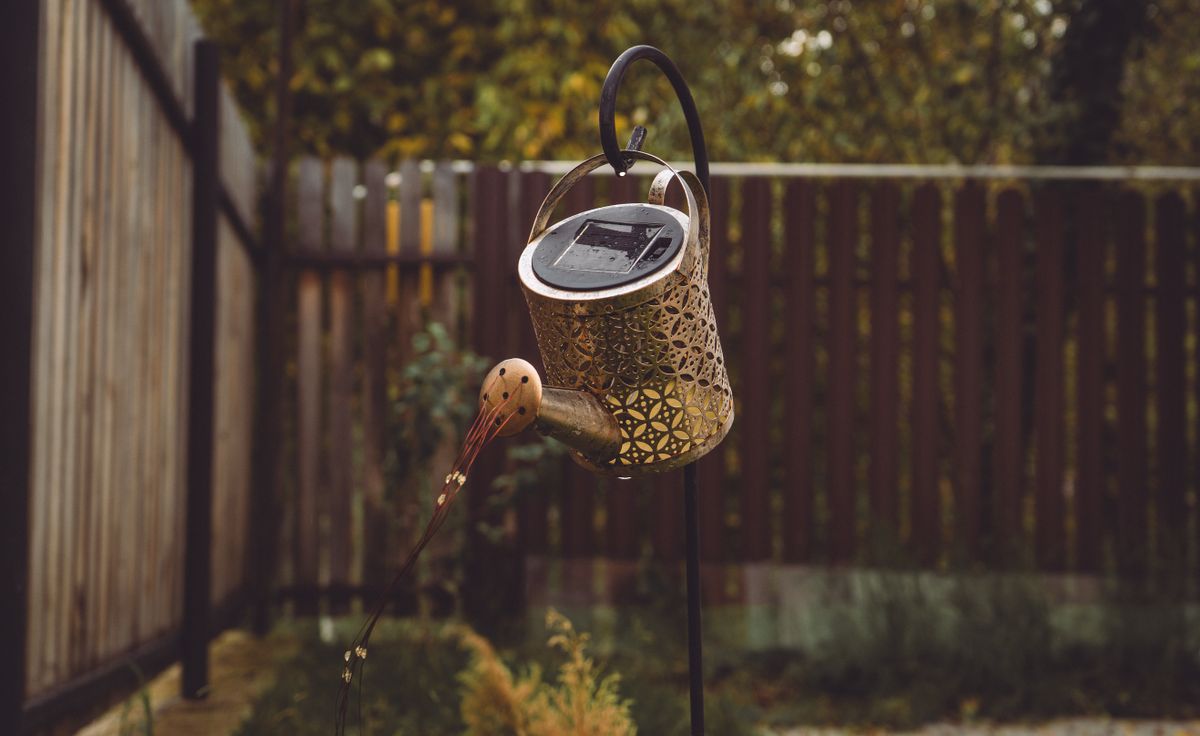
Photo by Gurgenidze G on Pexels
Solar Firefly Lights are designed to be resilient in moderate weather, though their performance depends heavily on the tensile strength of the internal wire. While they are built to dance, extreme wind speeds require a balance between flexibility and structural integrity to prevent the iron wires from snapping or becoming permanently bent. Researching various models, including the TONULAX butterfly solar lights, reveals that manufacturers utilize flexible iron wire specifically so the decorative elements can "flutter and bounce" without breaking, as noted by Pinnacle PEO.
I keep coming back to the way these lights handle a sudden thunderstorm. Somewhere around week two of my testing, a heavy rain hit, and I expected to find the stems flattened. Instead, the swaying mechanism acted as a relief valve for the wind's pressure; because the lights could move with the air rather than resisting it, they remained upright. This flexibility is a core feature for anyone choosing Solar Firefly Lights for windy landscapes, as it prevents the leverage of the wind from pulling the stake out of the ground. The movement isn't just for aesthetics; it's a functional adaptation to the outdoor environment.
Quick answers
Q: What wind speed is required to make Solar Firefly Lights move? A: Most Solar Firefly Lights begin to sway in breezes as light as 3-5 mph due to their high-flexibility iron wire construction. In heavier winds exceeding 20 mph, the motion becomes more vigorous, but the weighted base typically prevents the bulbs from tangling.
Q: Are there different styles of moving solar lights available? A: Yes, beyond the standard bulb, there are variations like the TONULAX butterfly lights which use the same swaying technology to make fabric wings flutter. You can also find Wind Dancing Solar Lights that feature different head shapes like wheat ears or starbursts.
Q: Can the swaying wires be bent manually to change the shape? A: While the iron wires are flexible for wind movement, they are designed to return to a vertical position; frequent manual bending can weaken the metal over time. Most users find that the natural "burst" shape provides the best movement without intervention.
Learn more about Solar Firefly Lights at https://solarfireflylights.com.
Sources
- Swaying Butterfly Lights That Move In The Wind, 2-Pack For Yard & Pathway
- 2 Pack Solar Garden Lights - New Upgraded Solar Swaying Light ...
- Solar lights that sway with wind - Facebook