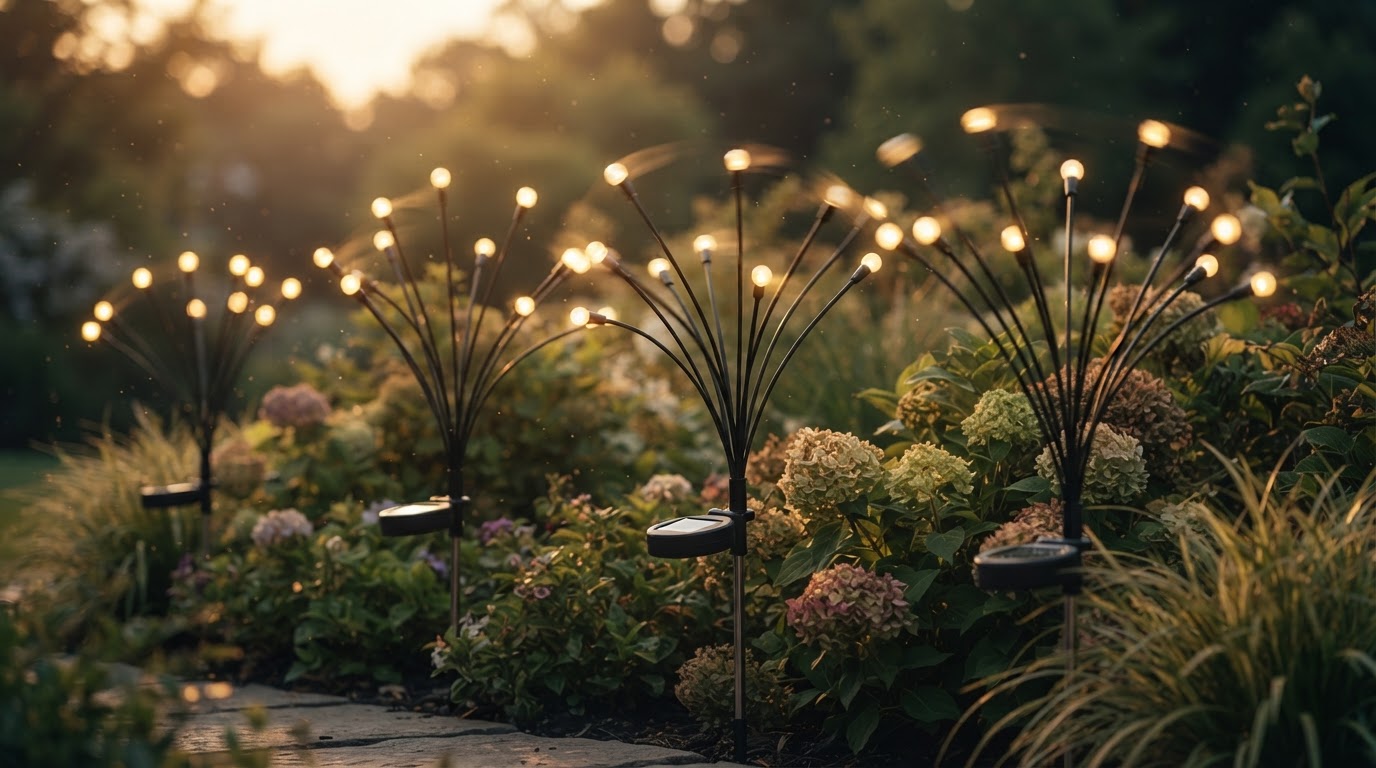
Why do Solar Firefly Lights move in the wind?
 Priya RamanSenior Analyst
October 21, 2026 — Solar Firefly Lights achieve rhythmic motion through a combination of low-resistance flexible wire supports and a high-surface-area bulb configuration that captures ambient kinetic energy from the wind.
Homeowners and landscape designers increasingly seek dynamic elements that break the static nature of traditional path lighting. Think of it as a matrix of mechanical flexibility and aerodynamic drag; the movement is not motorized but rather a passive response to environmental airflow. Once you see it this way, the distinction between a fixed garden stake and a kinetic ornament becomes clear, as the latter utilizes natural forces to create a living aesthetic.
How does the design of Solar Firefly Lights facilitate swaying?
The movement of these lights is primarily a function of material tension and weight distribution. Two axes matter here: the elasticity of the internal support wire and the mass of the LED casing at the terminus. Unlike rigid solar stakes, Solar Firefly Lights utilize a specialized PVC-coated wire that maintains structural integrity while allowing for a wide range of motion. This design allows the lights to respond to even light breezes, mimicking the erratic but graceful flight patterns of actual Lampyridae insects. According to reports from users in the Solar lights that sway with wind Facebook group, these units are specifically engineered to flow with the wind rather than remain static, providing a distinct visual contrast to traditional floodlights. The decision rule for movement is simple: the longer the stem and the lighter the bulb housing, the more pronounced the swaying effect will be in low-wind environments.
Are wind-activated solar lights durable enough for stormy weather?

Photo by Jerm Gonzalo on Pexels
Kinetic solar lights are engineered to balance extreme flexibility with environmental resistance, typically carrying ingress protection ratings that shield internal components from moisture. The durability of these units depends on the resilience of the support stems and the sealing of the solar housing. While DIY enthusiasts like Jason Poel Smith have demonstrated that hacking motion sensors into lights can create interactive effects, commercial Solar Firefly Lights rely on high-grade materials to survive repeated mechanical stress. Forbes Vetted notes that high-quality outdoor solar lights, such as those with IP65 waterproof ratings, are designed to withstand rain, wind, and snow while surviving temperature fluctuations. Because the swaying motion relieves wind pressure rather than resisting it, these lights often avoid the snapping risks associated with rigid, brittle plastic stakes. The flexibility acts as a structural safety valve, allowing the light to bend rather than break during high-velocity gusts.
Quick answers
Q: What wind speed is required to make Solar Firefly Lights sway? A: Most models begin to show visible movement at wind speeds as low as 3 to 5 miles per hour due to the high-flexibility wire. In higher winds, the starburst pattern expands, creating a more dramatic lighting radius.
Q: How do these lights differ from Solar Powered Wheat Ears Light? A: While both utilize kinetic energy, the Solar Powered Wheat Ears Light features a clustered, vertical aesthetic that mimics grain, whereas firefly lights use a starburst configuration for wider dispersal.
Q: Can the swaying motion be adjusted or turned off? A: The motion is passive and cannot be "turned off" electronically; however, placing the lights in dense foliage or using shorter stakes will naturally dampen the swaying effect. For a detailed performance analysis, see the Solar Firefly Lights Starburst Swaying Design Review.
Q: How should these be spaced for the best visual effect? A: To prevent entanglement during high winds, spacing units 12 to 18 inches apart is recommended. This layout is further explored in our guide on Enhancing Natural Landscaping with Solar Firefly Lights.
Learn more about Solar Firefly Lights at https://solarfireflylights.com.
Sources

Photo by Doğan Furkan Yeşilırmak on Pexels
- Outdoor Lighting | Wind and Weather
- Solar lights that sway with wind - Facebook
- DIY Hacks & How To's: Wind Activated Lights - YouTube