Solar Firefly Lights Placement and Troubleshooting Guide
Follow the 6-6-12 rule: position your solar firefly lights where they receive 6 hours of unshaded direct sunlight, keep flexible stems 6 inches clear of dense foliage for natural swaying, and maintain 12 feet of separation from artificial evening lights to ensure dusk-to-dawn sensors trigger reliably.
Essential Placement & Performance Metrics
- 6 Hours Direct Sunlight: Solar panels require at least 6 unshaded midday solar hours to achieve an 8 to 10-hour nighttime glow.
- 6 Inches Foliage Clearance: Stems must be positioned at least 6 inches from dense vegetation to allow natural swaying in the wind.
- 12-Foot Light Buffer: Ambient streetlights or porch fixtures within 12 feet will override the dusk-to-dawn sensor and keep lights off.
- 8-Hour Initial Charge: Charge units with the master power switch set to ON for 8 full hours before initial dusk operation.
- 1-to-2 Year Battery Life: Replace internal NiMH rechargeable batteries every 12 to 24 months to maintain full charge capacity.
Pre-Installation & Placement Audit Checklist

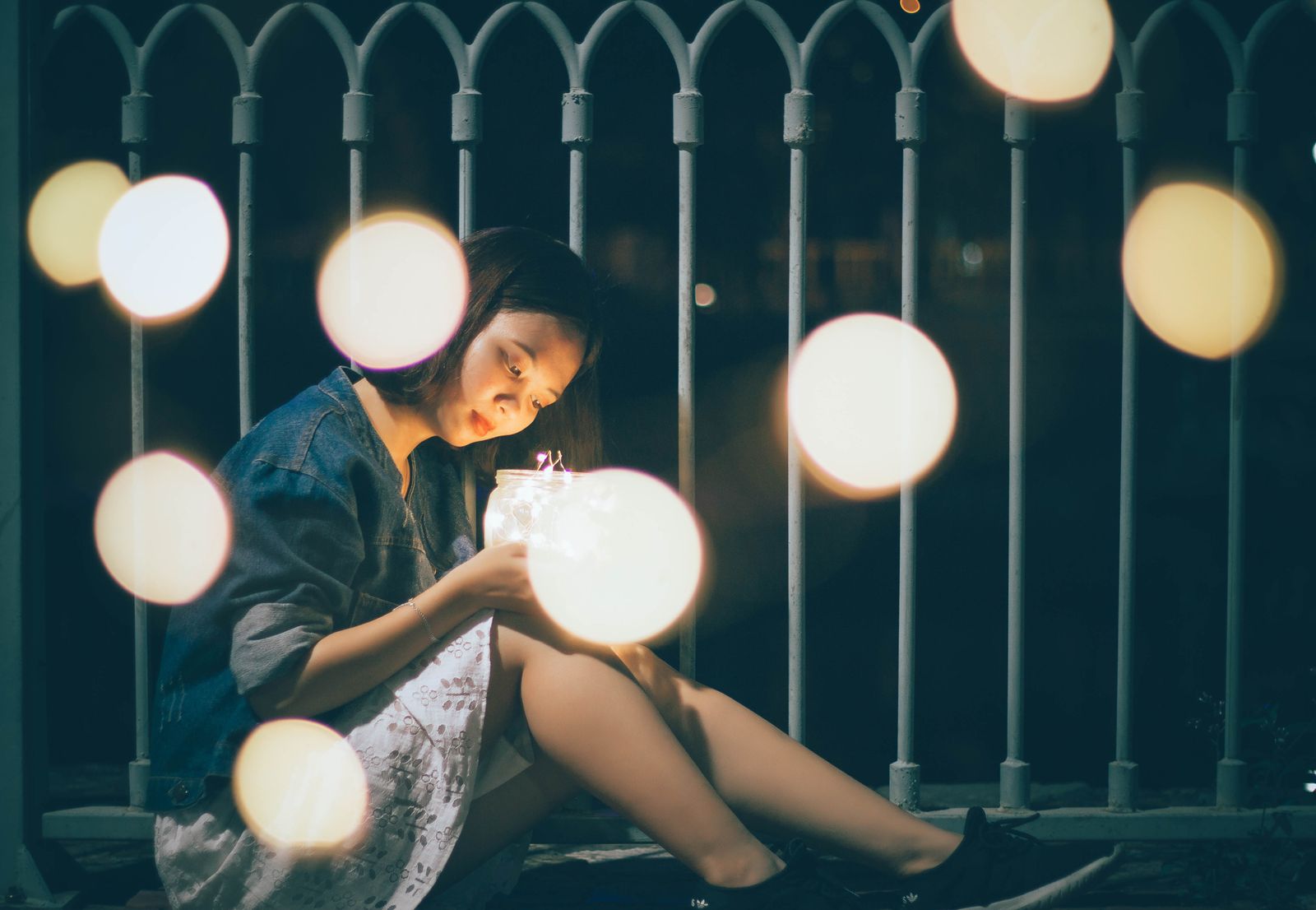
Photo by Michele Raffoni on Pexels
- Verify direct sunlight hits the target spot for at least 6 continuous hours daily between 10 AM and 4 PM.
- Check that foliage or taller perennials are at least 6 inches away from flexible stems to allow free breeze movement.
- Measure a 12-foot buffer distance from bright porch lights, floodlights, or street lamps.
- Ensure soil is softened or pre-moistened so stake shafts push in smoothly without bending the panel bracket.
- Confirm the underside power switch is set to 'ON' prior to the initial 8-hour charge cycle.
Printable Care & Quick-Fix Reference Sheet
- Sunlight Benchmark: 6+ hours of unshaded direct sunlight charges internal batteries for 8-10 hours of illumination.
- Breeze Buffer Zone: Keep a 6-inch perimeter around flexible stems so warm LED bulbs sway naturally in wind without tangling.
- Sensor Distance: Position panels 12 feet away from porch lights or street lamps to prevent daytime sensor trigger faults.
- Panel Cleaning Routine: Wipe solar panel face monthly using a damp microfiber cloth with mild dish soap to remove tree sap and dust.
- Battery Replacement Schedule: Swap internal rechargeable NiMH AA/AAA batteries every 18-24 months for optimal dusk output.
Pro Tip: Optimizing Breeze Clearance for Maximum Stem Sway
To achieve the most convincing firefly motion, stake your fixtures in micro-breeze corridors—such as the edge of path borders or open bed perimeters—staggered 3 feet apart. Maintain a strict 6-inch buffer between the flexible stems and dense foliage like hydrangeas or boxwoods. This prevents stems from catching on leaves and ensures gentle 360-degree swaying even under light 3–5 mph summer winds.
Interactive Diagnostic Logic: Why Isn't My Light Glowing?
- Is the light completely unlit at dusk? → Yes: Is the master power switch turned ON?. No: Is the light turning off prematurely before 6 hours?
- Is the master power switch turned ON? → Yes: Is direct sunlight hitting the panel for 6+ hours?. No: Flip switch to ON position and charge in direct sunlight for 8 hours.
- Is direct sunlight hitting the panel for 6+ hours? → Yes: Are artificial ambient lights within 12 feet of the panel?. No: Relocate stake to an open bed away from roof overhangs or shade trees.
- Are artificial ambient lights within 12 feet of the panel? → Yes: Move stake 12+ feet away from porch lights or streetlamps to allow dusk sensor triggering.. No: Clean solar panel with microfiber cloth and test or replace the rechargeable NiMH battery.
- Is the light turning off prematurely before 6 hours? → Yes: Inspect panel for dust or tree sap, or verify if winter solar angle reduces daily sun exposure below 6 hours.. No: System operating normally.
Comprehensive Troubleshooting Matrix
| Symptom | Likely Cause | 2-Minute Fix | Long-Term Preventative Action |
| --- | --- | --- | --- |
| Light does not turn on at dusk | Power switch set to OFF or dusk sensor blinded by ambient light | Flip switch to ON; cover panel with palm to test sensor in darkness | Maintain 12-ft clearance from artificial outdoor lighting |
| Illumination lasts under 4 hours | Insufficient direct sun (under 6 hrs) or dirty solar panel glass | Wipe glass panel with damp microfiber cloth and mild soap | Trim overhanging foliage or relocate stake to South-facing lawn |
| Stems do not sway in the wind | Stems jammed against dense foliage or staked too closely together | Space stakes 3 feet apart with 6 inches clearance from plants | Prune surrounding perennials back 6 inches |
| LEDs flicker sporadically | Loose battery connection or terminal corrosion from moisture | Open battery case, unclip AA/AAA NiMH battery, clean contacts with cloth | Apply silicone grease sealant to battery box gasket annually |
| Lights turn on during daytime | Solar panel completely shaded by heavy canopy, tricking sensor | Move panel to area with open sky exposure | Clear overhead branch obstruction above 45-degree sun axis |
Seasonal Maintenance Schedule: Spring Setup to Winter Care
- Monthly — Wipe solar panels clean with a microfiber cloth and warm soapy water to eliminate dust and pollen buildup.
- Quarterly — Inspect flexible stems and stake ground anchor depth (4-6 inches); adjust placement to preserve breeze clearance.
- Biannually (Spring / Autumn) — Check solar panel tilt angle and clean battery contacts inside the lower panel housing.
- Annually (Month 12 to 24) — Replace internal rechargeable NiMH AA/AAA batteries to maintain 8-10 hour dusk runtime performance.
- Winter Freeze Warning — Store light stakes indoors during sub-zero freezing spells to prevent ground ice expansion damage.
Featured Solar Firefly Light Packs for Ideal Layout Density
Choose the pack size that best matches your garden border length and desired night glow density. Each pack features flexible stems and warm dusk-to-dawn LED bulbs.
Placement Scenarios: Sunlight Exposure & Performance Matrix
| Placement Scenario | Daily Sun Hours | Expected Night Runtime | Stem Sway Motion Quality | Sensor Reliability Score |
| --- | --- | --- | --- | --- |
| Open Lawn / Pathway Edge | 6 to 8+ Hours | 8 to 10 Hours | Optimal (360-degree sway) | 100% (No artificial interference) |
| Light Shrub Bed Perimeter | 4 to 6 Hours | 5 to 7 Hours | Good (Slight leaf contact) | 90% (Ensure 12-ft porch light distance) |
| Deep Canopy / Shaded Patio | 1 to 3 Hours | 1 to 3 Hours | Restricted (Dense branches block breeze) | 50% (Covered roof overhang shadows panel) |
| Under Bright Security Light | 6 to 8 Hours | 0 Hours (Will not trigger) | Optimal sway | 0% (Dusk sensor detects security light as day) |
Visualizing Sun Angle, Breeze Clearance, and Dusk Sensor Clearance
Photo by Kha Ruxury on Pexels
Solar Exposure & Placement Estimator Brief
5 Common Placement Mistakes That Ruin the Firefly Effect
Battery Lifecycle & Performance Timeline (Months 1 to 24)
- Months 1 - 6 — Peak Performance: Battery holds full 100% charge capacity. Expect 8-10 hours of illumination on a 6-hour direct sunlight charge.
- Months 7 - 12 — Optimal Efficiency: Battery operates at 85-95% efficiency. Winter sunlight reductions may lower runtime to 5-7 hours.
- Months 13 - 18 — Mid-Life Maintenance: Minor capacity reduction (~75-85%). Monthly panel cleaning becomes vital to maintain maximum solar intake.
- Months 19 - 24 — End-of-Life Swap Window: Battery storage degrades below 60%. Replace internal NiMH AA/AAA rechargeable battery to restore full dusk-to-dawn performance.
Frequently Asked Questions About Solar Firefly Light Care
Recommended Actions & Next Steps
Your decision: Determine if your current stake locations meet the 6-6-12 placement standard or if diagnostic fixes are needed.
Do this next: Perform a nighttime walk-through: turn off nearby porch lights, wipe solar panels with a microfiber cloth, and re-stake units into unshaded soil.
- Read next: How to Prepare Hard or Clay Soil for Solar Firefly Garden Stakes
- Read next: How to Winterize Solar Firefly Lights: Off-Season Storage & Care Guide
Expand your lighting density along walkways with the Solar Firefly Lights 8-Pack (64 Warm LEDs) for a richer evening glow.
Explore Related Garden Lighting & Styling Guides
Provide curated internal links to pillar guides, staging tutorials, and seasonal storage tips.
Cover photo by Kha Ruxury on Pexels.