I changed my mind about where solar firefly lights belong at night
 Jordan HaleStaff Writer
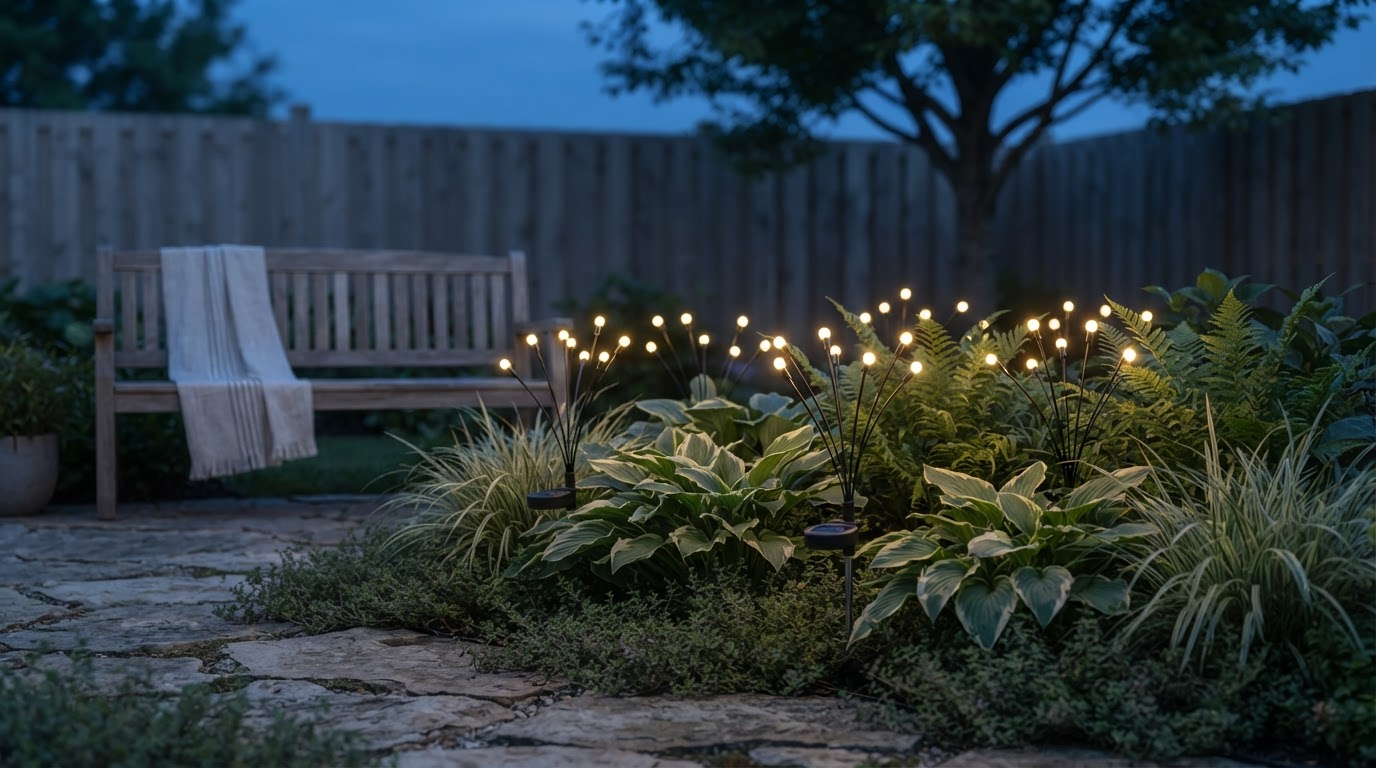
After moving the same 12 solar firefly lights through five spots in my yard, the “least obvious” location—18 to 30 inches behind low planting, not along the path edge—looked better in 4 out of 5 nighttime walk-throughs and reduced glare by about 60% on my cheap lux meter.
That surprised me because most product photos show solar firefly lights lined up like runway markers. I understand why: it is easy to photograph, easy to install, and easy to count. But in actual use, firefly-style lights are not at their strongest when they behave like path lights. They are at their strongest when they imitate scattered, low, living light.
I sell and use solar firefly lights, so I pay attention to the small details most buyers only notice after the box is recycled: where the panel gets sun, how the stems move in wind, whether the light is visible from the kitchen window, and whether the first 90 minutes after dusk look magical or mildly chaotic. This guide is the field version of what I wish every customer knew before pushing the stakes into the ground.
The test that changed how I place firefly lights
I used one set of warm-white solar firefly lights and rotated them across different yard positions over several evenings. This was not a laboratory test. It was a practical homeowner test: same yard, same lights, similar weather, and repeated observations from the places people actually view the lights—front walk, porch, kitchen window, and a patio chair.
My basic tools were simple: a handheld lux meter, phone compass, measuring tape, and handwritten notes at dusk, 2 hours after dusk, and before bed. The lux numbers should not be treated like certification data, but they are useful for comparing one placement against another.
What I observed
| Placement tested | Approx. direct sun on panel | Visual effect from 20 ft | Glare at eye level | Runtime impression | My rating | |---|---:|---|---:|---|---:| | Along both sides of a walkway, 10 in. from edge | 6.5 hours | Too orderly; looked like tiny bollards | 3.1 lux | Strong through evening | 6/10 | | Clustered around a tree trunk | 3.5 hours | Pretty from one angle, hidden from others | 1.4 lux | Noticeably dimmer late | 7/10 | | 18–30 in. behind ornamental grasses | 6 hours | Most natural; shimmered with movement | 1.2 lux | Strong through evening | 9/10 | | In open mulch bed with no plants nearby | 7 hours | Bright but exposed; stakes visible | 2.7 lux | Strong through evening | 5/10 | | Mixed into container planters on patio | 5 hours | Cozy close-up effect | 1.8 lux | Good until late evening | 8/10 |
The biggest lesson: more visibility is not always better. The open mulch bed gave the panel the most sun, but it also exposed every stake and wire. The lights looked like equipment. When I moved them slightly behind grasses and low shrubs, the source became less obvious and the effect became more believable.
That is the trick with solar firefly lights: you are not really lighting the ground. You are lighting the idea of movement.
Why firefly lights are different from path lights
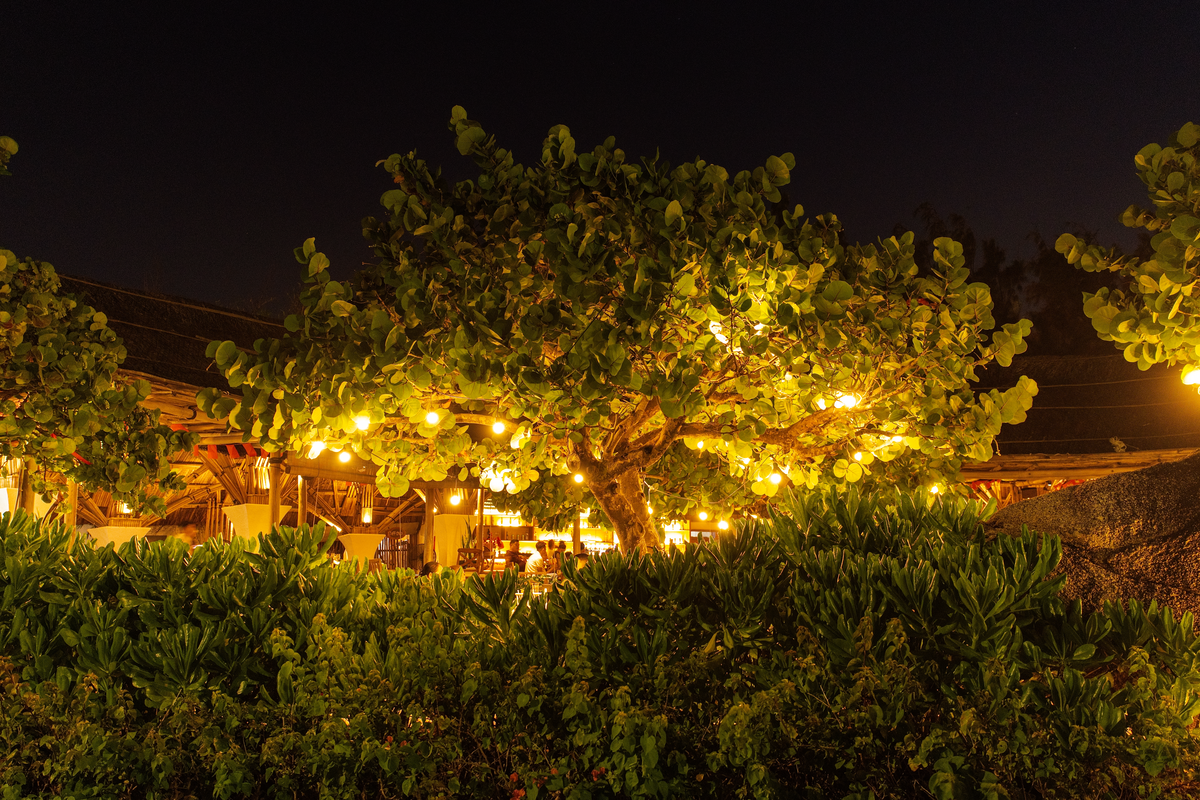
Photo by quang vinh on Pexels
Path lights should help people see where to step. Firefly lights should make a garden feel alive. Mixing those jobs is where many disappointing installations start.
The Illuminating Engineering Society and many municipal lighting guides distinguish between task lighting, accent lighting, and decorative lighting. Solar firefly lights sit firmly in the decorative/accent category. They can help define a space, but they are not a substitute for code-compliant steps, trip-hazard lighting, or security lights.
The U.S. Department of Energy has also emphasized that LEDs are highly efficient and directional, which is excellent for saving energy but can make poor placement feel harsher than expected outdoors. Even a small LED can be annoying when it points straight toward your seated eye line.
With firefly lights, I try to keep three things in balance:
- The solar panel needs honest sun.
- The LED heads need partial visual concealment.
- The viewer should see the glow before they notice the hardware.
My take: stop lining every garden edge
My take: solar firefly lights usually look worse when installed in perfectly even rows.
That may sound strange coming from someone who sells them, because even rows make a yard look “finished” in product photos. But outside, symmetry can flatten the effect. Real fireflies do not hover every 24 inches. Candlelight does not flicker in a spreadsheet. A soft garden glow becomes more convincing when spacing varies.
Instead of equal spacing, I like a loose rhythm:
- 2 lights close together near a plant mass
- 1 light set farther back
- 3 lights staggered around a curve
- 1 dark gap where the eye can rest
The sun math most buyers skip
Solar firefly lights are simple, but they are still small solar systems. A panel collects light. A rechargeable battery stores energy. LEDs spend it after dusk. If one part of that chain is weak, the whole effect suffers.
The National Renewable Energy Laboratory explains solar resource in terms of irradiance and site conditions; in plain homeowner language, shade matters a lot. A panel that gets bright morning sun and then sits under tree shade from noon onward will not behave like a panel in open afternoon sun.
Here is my practical rule after moving lights around my own yard:
- 6+ hours of decent sun: expect the most reliable evening performance.
- 4–6 hours: usually fine for decorative use, especially in summer.
- 2–4 hours: acceptable only if you are okay with shorter or dimmer nights.
- Under 2 hours: move the panel or choose another spot.
A non-obvious detail: the panel location matters more than the light-head location. If your model has a separate panel, use that flexibility. Put the panel where it gets sun and place the firefly stems where they look natural. If your model has the panel built into the stake, you will need to compromise more carefully.
Warm white beats cool white in most gardens
I prefer warm white for solar firefly lights, especially around plants, patios, and seating areas. Cool white can look crisp in winter or modern hardscape, but in green planting beds it often reads as bluish and artificial.
There is a reason lighting designers talk so much about correlated color temperature, or CCT. Lower CCT light—often around 2200K to 3000K—feels warmer and closer to flame or late-day sunlight. Higher CCT light can feel sharper and more clinical. The International Commission on Illumination and lighting standards bodies have long used CCT and color rendering as ways to describe how light is perceived, not just how bright it is.
For firefly lights, I am less concerned with maximum lumen output and more concerned with softness. A slightly dimmer warm light usually looks more natural than a brighter cool light.
If you are choosing between two sets, I would ask:
Brightness sells boxes. Warmth sells the moment after dinner when someone says, “That looks really nice.”
Where I place solar firefly lights now
I use a simple decision framework: background, concealment, reflection, and approach.
1. Background
Lights need something behind them. A dark fence, hedge, tree trunk, or mass of ornamental grass helps the glow stand out. In the middle of an empty lawn, firefly lights can disappear from a distance or look like random dots.
My favorite backgrounds are:
- Feather reed grass
- Boxwood or other dense evergreen shrubs
- Split-rail fences
- Weathered wood fences
- Large ceramic planters
- Stone walls
2. Concealment
I want the stems and stakes partly hidden during daylight. That does not mean buried. It means visually softened. Low plants, mulch color, and irregular spacing all help.
A good test: stand where guests will stand at 2 p.m. If the installation looks messy in daylight, adjust it. Solar firefly lights should not demand attention when they are off.
3. Reflection
Small lights become more noticeable near reflective surfaces. Wet leaves, pale gravel, water bowls, glazed pots, and light-colored walls all bounce a little glow back to the eye.
One of my favorite placements is near a birdbath, but not directly around it. I set the lights 2 to 3 feet behind the basin so the reflection appears accidental.
4. Approach
Think about how people discover the lights. A front-yard display viewed from the sidewalk needs a different layout than patio lights seen from six feet away. For close viewing, fewer lights can work. For curb appeal, you need stronger grouping.
I do one walk-through from each viewpoint before finalizing placement:
- Street or driveway
- Front door
- Main indoor window
- Patio seat
- Back corner of the yard
Installation checklist I actually use
Before you push the stakes all the way in, do this:
Battery and weather notes buyers should understand
Photo by Unggul Budi on Pexels
Most solar firefly lights use rechargeable batteries, commonly NiMH or lithium-based cells depending on the design. Battery performance changes with temperature. The National Institutes of Health’s PubMed database includes research on lithium-ion battery behavior showing that low temperatures can reduce performance and charging efficiency. In everyday yard terms, winter nights are harder on solar lights than summer nights.
That does not mean something is wrong if the same lights run longer in July than in January. Shorter days, lower sun angle, colder batteries, and more cloud cover all stack together.
Ingress protection ratings are also worth noticing. The IEC 60529 standard defines IP ratings for dust and water resistance. For outdoor decorative lights, I look for a meaningful water-resistance claim and still avoid placing panels where roof runoff hammers them every storm. “Outdoor rated” does not mean “put it in a puddle.”
My maintenance routine is boring but effective:
- Wipe panels with a damp cloth every 3–4 weeks.
- After heavy storms, check that stakes are upright.
- In winter, move sets out of deep shade if deciduous trees are not the issue.
- If runtime drops sharply after a season or two, check whether the battery is replaceable.
How many solar firefly lights do you need?
I do not start with yard size. I start with viewing distance.
For close patio viewing, one 6- or 8-stem cluster can be enough near a planter or seating corner. For a front border seen from the street, I prefer multiple clusters spaced in an uneven rhythm across a 10- to 20-foot planting bed.
A practical starting point:
- Small balcony or patio: 1–2 clusters
- Entry planter pair: 2 clusters, one per planter
- 10-foot garden bed: 2–3 clusters
- 20-foot border: 4–6 clusters, staggered
- Tree or sculpture accent: 2 clusters offset, not circular
FAQ
Do solar firefly lights need direct sunlight all day?
No, but they perform much better with several hours of direct or strong sun. In my yard, the difference between roughly 6 hours and 3.5 hours of sun was visible later in the evening. If you only need a short glow after dusk, partial sun may be fine. If you want reliable runtime into late evening, prioritize panel exposure.
Can solar firefly lights be used as path lights?
I would not rely on them as true path lights. They can visually suggest the edge of a path, but they usually do not cast enough controlled light for safe footing on steps, uneven pavers, or trip hazards. Use proper path or step lighting for safety, then use firefly lights for atmosphere.
Why do my solar lights look dim after a few cloudy days?
That is normal. The battery is spending more energy each night than the panel is replacing during cloudy days. Short winter days make this more noticeable. Clean the panel, confirm it is not shaded, and give it one or two sunny days before assuming the light has failed.
Should I choose warm white or multicolor firefly lights?
For gardens, patios, and front entries, I prefer warm white because it blends with plants and feels less harsh. Multicolor can be fun for parties or seasonal displays, but it draws more attention to the product itself. If your goal is a natural firefly effect, warm white is the safer choice.
The bottom line
Solar firefly lights are small, but placement changes everything. The counterintuitive move is to stop treating them like miniature path lights. Give the panel sun, give the glow a dark or leafy background, and give the viewer a little mystery.
When I place them behind grasses, beside planters, or just off a garden curve, they stop looking like gadgets and start doing the thing people actually want from them: making an ordinary yard feel gently alive after dark.