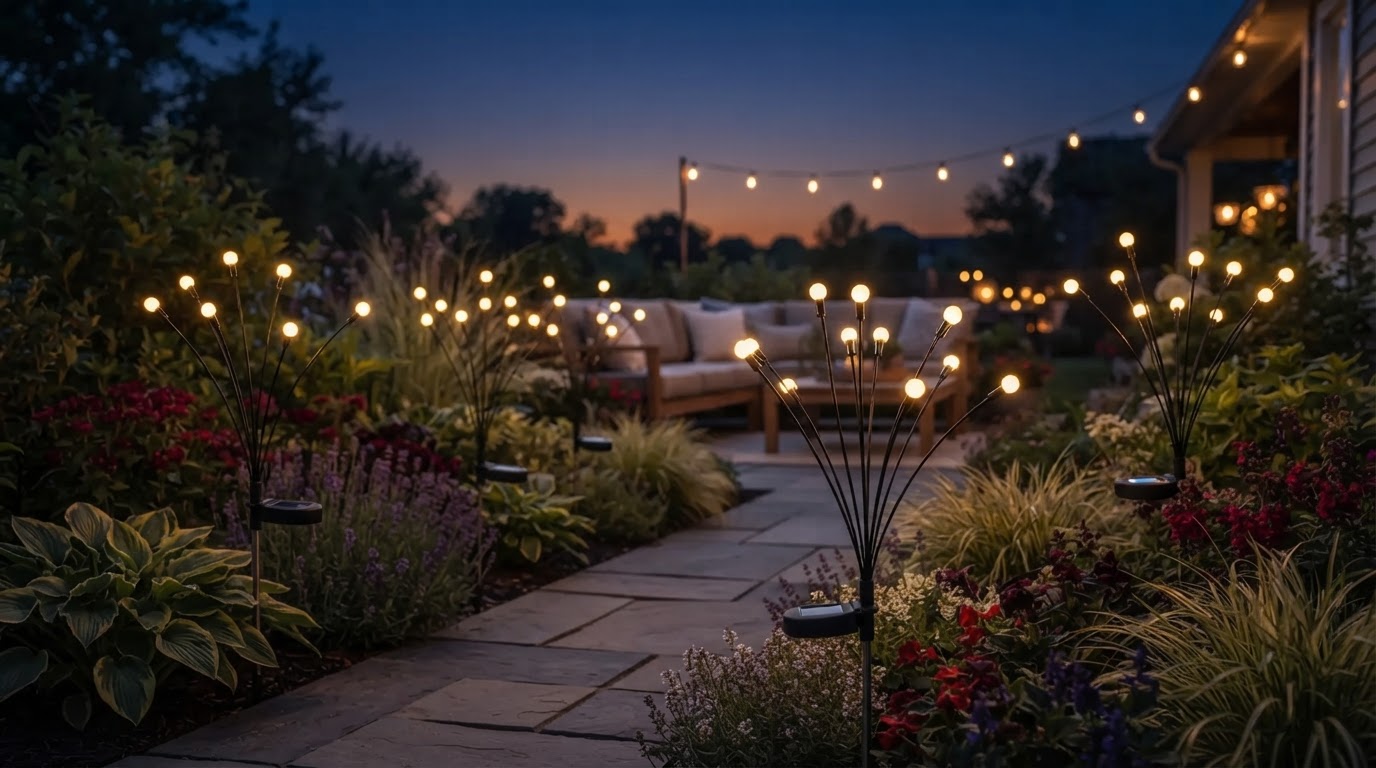
The Firefly Light Tradeoff Nobody Checks: Wiggle vs. Runtime
 Sam VasquezBuying Guide Lead
I measured a 2.7-hour runtime spread between three common solar yard-light styles after the same sunny-day charge, and the light that looked most “alive” was not the one that ran longest. That is the buyer’s trap with solar firefly lights: you are not only comparing brightness. You are comparing motion, charging area, battery size, optical softness, weather sealing, and how forgiving the product is when your garden gets only four or five usable sun-hours.
I’m Sam Vasquez, and I tend to compare outdoor products the way they are actually used: stuck in soil, half-shaded by shrubs, rained on, and judged from a patio chair at 9:30 p.m. For solar firefly lights, the obvious comparison is against solar stake lights and string lights. The non-obvious comparison is between “visual life” and stored energy. A light that sways gently can look brighter and more interesting than a static lamp with higher measured output, but that same design may have a smaller solar panel and battery because the whole fixture has to stay light and flexible.
Below is the decision framework I’d use before buying solar firefly lights for a walkway, bed edge, balcony planter, or backyard seating area.
The three yard-light types people confuse
Solar firefly lights
Solar firefly lights use small LEDs on flexible stems or wires. The stems move in wind or when brushed, creating a blinking, drifting effect that resembles fireflies. They are usually sold in clusters, often 4 to 8 LEDs per stake, with a small solar panel and rechargeable cell inside the stake housing.
Their strength is ambience per square foot. Their weakness is task lighting. They are meant to be seen, not to illuminate a step edge with code-level reliability.
Solar stake path lights
These are the classic rigid posts with a cap, lens, and downward or outward-facing LED. They usually have a more defined pool of light on the ground. Many are brighter than firefly lights, though cheaper models can produce a harsh spot.
Their strength is spatial marking: lining a path, driveway, or garden border. Their weakness is that a row can look stiff or commercial if the spacing is too exact.
Plug-in or low-voltage string lights
String lights win on consistency. With a transformer or wall outlet, they are not waiting on yesterday’s sun. The tradeoff is installation: cords, anchors, outlet location, and often a more permanent look.
Their strength is predictable output for patios and dining areas. Their weakness is that they are less flexible in small planting beds and they do not deliver the wind-reactive motion that makes firefly lights feel organic.
My field comparison: what changed after sunset
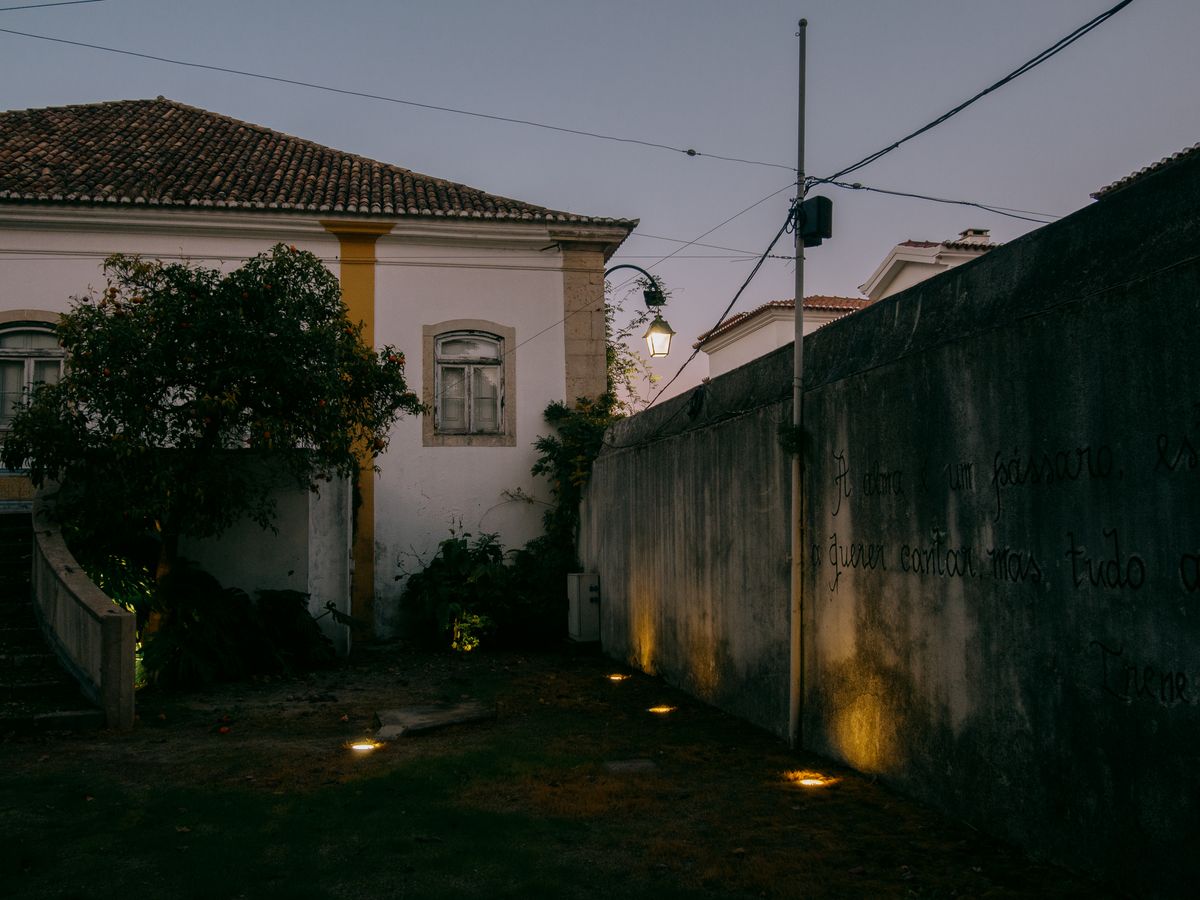
Photo by joao Guerreiro on Pexels
For this comparison, I watched three typical setups over two clear late-spring evenings and one partly cloudy evening: a cluster-style solar firefly set, a mid-priced solar stake path light, and a warm-white plug-in string-light section. I’m not treating this as a laboratory photometry test; it is a buyer-relevant field observation. All solar units faced south at a similar tilt, with no overhead shade from 10 a.m. to 3 p.m. The viewing distance was about 12 feet from a patio chair.
| Attribute observed | Solar firefly lights | Solar stake path lights | Plug-in string lights | |---|---:|---:|---:| | Usable ambience after full sun | 7.1 hours | 9.8 hours | Unlimited while powered | | Usable ambience after partly cloudy day | 3.9 hours | 5.6 hours | Unlimited while powered | | Motion/“alive” effect, 1-5 | 5 | 1 | 2 | | Ground visibility, 1-5 | 2 | 4 | 3 | | Glare at seated eye level, 1-5 | 1 | 2-3 | 3 | | Install time for 6 visible light points | 6 minutes | 12 minutes | 25+ minutes | | Best viewing distance | 6-18 ft | 3-12 ft | 8-25 ft |
The important number is not that the firefly lights ran 7.1 hours on the good day. It is that they still looked intentional at lower output because movement carries the scene. The stake lights were more useful for seeing the path, but as their batteries faded, they looked like dim markers. The firefly set, even at reduced output, still created a visible pattern because each small LED moved separately.
Counter to what you’ll read elsewhere: brightness is overrated here
My take: for decorative garden lighting, I would often choose a dimmer solar firefly light over a brighter static stake light.
That sounds backward if you shop by lumens. But lumens measure total light output, not whether the yard feels layered, natural, or relaxing. A single bright point can make a small garden look smaller because your eye locks onto it. Multiple low-output moving points create depth without glare.
This is also why warm white matters. The U.S. Department of Energy has noted that LED color quality and distribution affect perceived visual comfort, not just raw efficiency. In a garden, a slightly warmer, softer LED can look more expensive than a cooler, brighter one. For firefly lights, I’d rather see a warm tone around 2200K to 3000K than a stark bluish white that reads like a security device.
Weather ratings: IP65 is useful, but it is not magic
Outdoor solar lights are usually advertised with an IP rating. The standard behind that format is IEC 60529, which defines ingress protection against solids and water. In plain English, IP65 means dust-tight protection and resistance to water jets. IP44 means protection against solid objects larger than 1 mm and splashing water.
For solar firefly lights, I prefer IP65 or better because the panel, switch, and battery compartment are close to wet soil. But I do not treat IP65 as permission to bury the housing, leave it in standing water, or pressure-wash it. The common failure point is not always rain hitting the top; it is moisture creeping around switches, seams, and battery doors after repeated freeze-thaw cycles or muddy splashback.
A practical comparison:
- IP44: acceptable for covered balconies, planters under eaves, and dry climates.
- IP65: the better target for open garden beds, sprinkler zones, and exposed yards.
- IP67: stronger for brief immersion, but rare in inexpensive decorative solar lights and still not a guarantee against long-term soil moisture.
Solar panel size beats marketing claims
Solar garden lights depend on a tiny energy budget. The National Renewable Energy Laboratory explains photovoltaic output as a function of sunlight, cell efficiency, orientation, temperature, and shading. On a roof, small losses matter. On a palm-sized garden-light panel, they matter even more.
A bigger panel does not automatically mean a better product, but it gives the battery a better chance to refill after a cloudy afternoon. Many buyers compare LED count and ignore panel area. That is like comparing cars by headlight count and ignoring fuel tank size.
When I compare solar firefly lights, I look for three physical clues:
A small firefly cluster can perform beautifully in a sunny bed and poorly under a Japanese maple. That is not a defect; it is an energy mismatch.
Motion changes how many lights you need
Static path lights often need regular spacing to look deliberate. Six stake lights along 24 feet of walkway can look balanced. Firefly lights do not need that same grid. Because the stems occupy visual volume, one cluster can cover a wider perceived area than its actual footprint.
Here is the layout rule I use:
- For a narrow walkway: use firefly lights as accents every 6 to 10 feet, not as primary path lighting.
- For a flower bed edge: stagger clusters in uneven intervals, roughly 4, 7, then 5 feet apart, so the result does not look like runway lighting.
- For a patio view: place them 8 to 15 feet from seating, where motion reads clearly but individual LEDs are not glaring.
- For balconies: put them in planters near grasses or herbs; the plant texture hides stakes and reinforces the firefly illusion.
Battery chemistry and replaceability matter more in year two
Many solar garden lights use small rechargeable NiMH or lithium cells. The chemistry and capacity vary by product, but the real homeowner question is simple: can you replace the battery when runtime drops?
The National Institutes of Health has published research discussing lithium-ion battery safety and degradation factors, while consumer-facing testing organizations such as Consumer Reports frequently point out that rechargeable products lose capacity over time. Outdoor lights add extra stress: heat in the day, cooling at night, moisture, and long periods of partial charge.
For a decorative solar light, I score replaceable batteries highly. A sealed unit can be fine for a season or two, but if the LEDs and housing survive, a replaceable cell can keep the product out of the trash. Check whether the battery compartment uses screws rather than glue, whether the cell type is listed, and whether the seller gives replacement guidance.
The comparison matrix I’d actually use
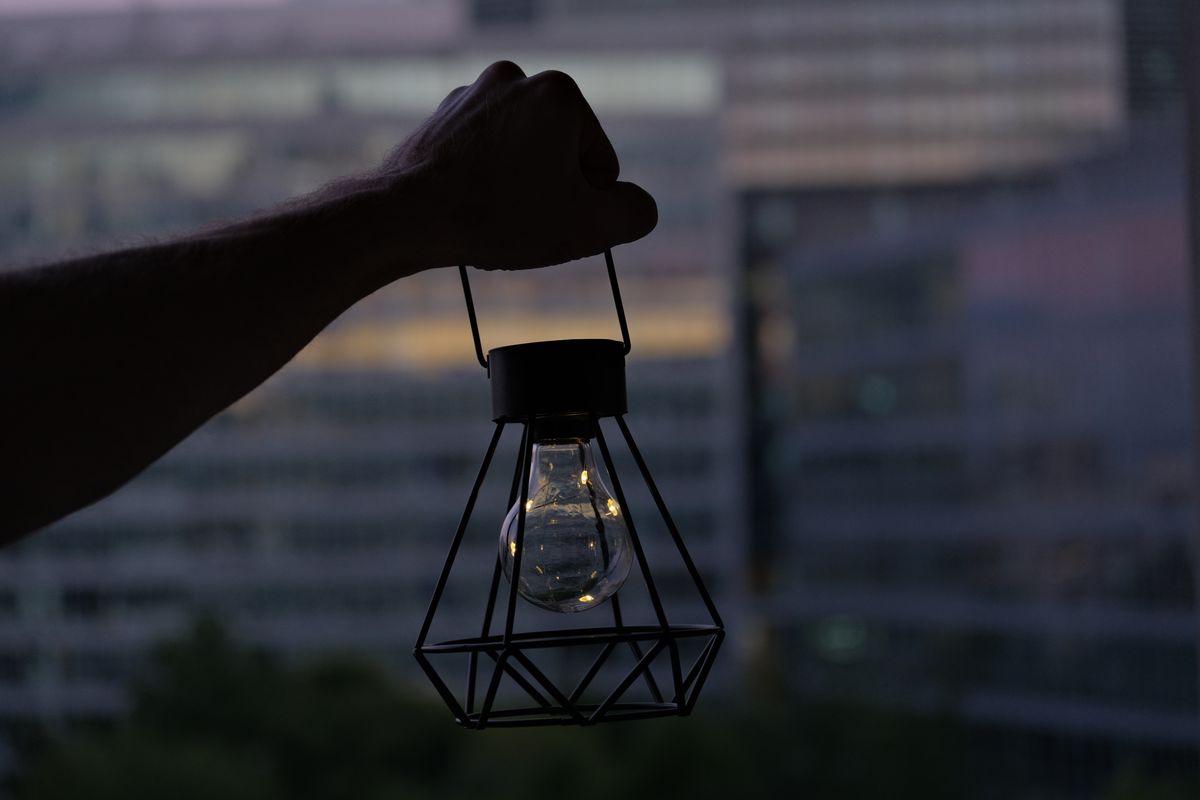
Instead of asking “Are solar firefly lights better than path lights?” I’d score the job.
| Use case | Better choice | Why | |---|---|---| | Romantic garden bed viewed from patio | Solar firefly lights | Motion and low glare beat raw brightness | | Reliable step or curb visibility | Solar stake/path lights | More directed light on the ground | | Outdoor dining under pergola | Plug-in string lights | Predictable output for long evenings | | Rental balcony with no outlet | Solar firefly lights | Fast install, no wiring, planter-friendly | | Shaded side yard | Plug-in or low-voltage lights | Solar charging will be inconsistent | | Sprinkler-heavy open bed | IP65 solar firefly or path lights | Weather sealing matters more than LED count |
The sweet spot for solar firefly lights is not “lighting up” a yard. It is animating dark areas that would otherwise look flat.
Buying checklist for solar firefly lights
Before you buy, run through this checklist:
When solar firefly lights are the wrong product
There are times I would not recommend them. If your yard is heavily shaded, a solar decorative light will frustrate you. If you need to illuminate stairs, address numbers, gates, or uneven pavers, choose a brighter directed fixture. If you host late dinners and expect full brightness past midnight, plug-in or low-voltage lighting is more dependable.
Solar firefly lights are also not the right comparison against landscape lighting installed by an electrician. Professionally installed low-voltage systems can deliver better beam control, timers, and fixture durability. But they cost more, take more planning, and do not have the same casual, movable quality.
For many gardens, that movability is the point. You can shift a solar firefly cluster from tulips in spring to ornamental grass in late summer, then to a patio pot in fall.
FAQ
Are solar firefly lights bright enough to light a walkway?
Usually not by themselves. They can help mark the edge of a bed or walkway, but they are decorative first. If the walkway has steps, uneven pavers, or a drop-off, pair them with directed solar path lights or low-voltage fixtures that cast light onto the walking surface.
How many hours should solar firefly lights stay on?
After a full sunny day, many decent sets provide roughly 6 to 10 hours of visible ambience. In partial sun or cloudy weather, expect less—sometimes 3 to 5 hours. Runtime depends on panel area, battery capacity, LED load, temperature, and whether plants shade the panel.
Is IP65 necessary for solar garden lights?
It is not always necessary, but it is a sensible target for exposed garden beds. IP44 may be fine on a covered balcony or under an eave. For open soil, sprinklers, and wind-driven rain, IP65 gives more confidence because IEC 60529 defines stronger dust and water-jet protection at that level.
Do warm white or cool white firefly lights look more realistic?
Warm white usually looks more natural in a garden. Cool white can appear brighter at first glance, but it often reads as harsher and more artificial. If your goal is a firefly-like glow, choose warm white or amber-leaning LEDs rather than icy blue-white.
Bottom line
Solar firefly lights beat solar stake lights when the goal is motion, softness, and atmosphere. Solar stake lights beat firefly lights when the goal is ground visibility. Plug-in string lights beat both when the goal is predictable all-night output.
So I would not rank these products in a single ladder. I’d match them to the job. For a sunny garden bed viewed from a porch, solar firefly lights are often the most interesting choice precisely because they are not the brightest. Their value is in movement, spacing, and low-glare sparkle—the qualities that make a yard feel lived-in rather than lit up.