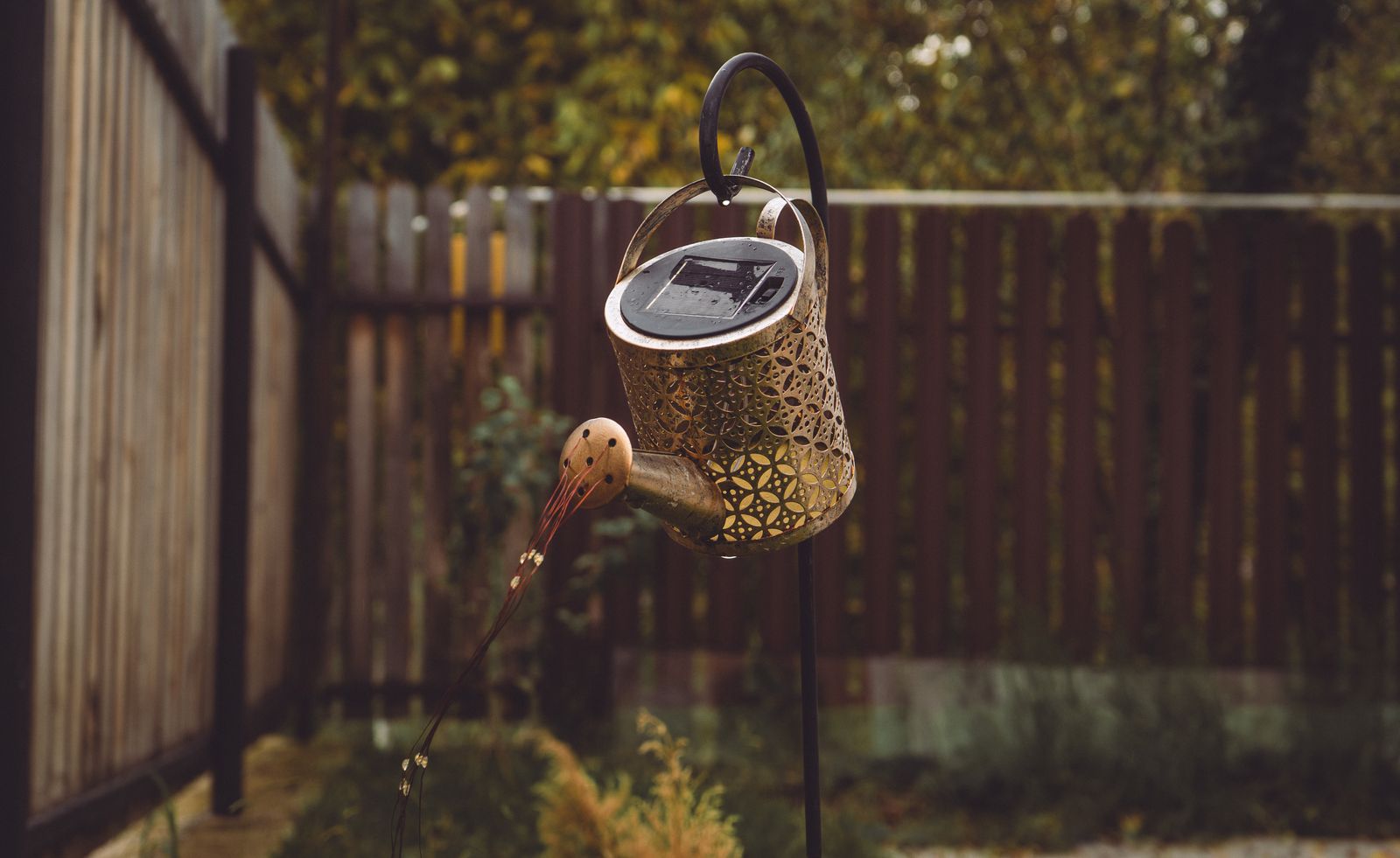
Why Solar Garden Lights Dim in Winter (and How to Maintain Battery Life Year-Round)
Winter daylight delivers up to 50% less solar irradiance, reducing average illumination from 8–10 hours down to 2–4 hours. Cold weather also temporarily decreases NiMH battery discharge capacity by 20–30%. Restore winter runtime by cleaning panel tops weekly, removing shade obstructions, and performing an indoor 72-hour full charge cycle.
At a Glance: Winter Battery Care & Runtime Essentials
- A 50% drop in peak solar irradiance occurs between November and February across North American latitudes (30°N–45°N).
- Sub-freezing temperatures (below 32°F / 0°C) increase internal resistance in NiMH batteries, reducing usable capacity by 25%.
- A 15° to 20° steeper panel tilt angle captures up to 35% more low-horizon winter sunlight.
- A 48-to-72 hour deep charge (turning the power switch OFF during direct sunlight) resets battery memory and restores cell voltage to 1.2V–1.4V.
- Cleaning dust, frost, and salt residue off photovoltaic lenses improves energy conversion efficiency by up to 20%.
Winter Solar Light Maintenance Checklist
Photo by Unggul Budi on Pexels
- Wipe solar panel surfaces weekly with a damp microfiber cloth to remove snow, frost, salt, and dirt buildup.
- Reposition garden stakes away from winter shadow lines cast by bare tree branches, roof overhangs, or tall fences.
- Angle adjustable panel tops 15° steeper to capture lower-elevation winter sun arcs.
- Inspect stem stakes for ground frost-heave and press securely into soft, thawed soil.
- Perform a 48-to-72 hour 'deep charge' reset: switch lights OFF during 2 consecutive sunny days to allow full battery fill.
- Verify internal NiMH rechargeable battery terminals are free of white powder oxidation or moisture corrosion.
- Bring batteries inside for a warm 24-hour room-temperature recharge if outdoor ambient temps drop below 0°F.
- Ensure dusk-to-dawn sensors are clear of nearby holiday string lights or porch fixtures that fool sensors into staying off.
Printable Seasonal Solar Care Cheat Sheet
- Weekly Winter Task: Wipe panel lenses with warm water and microfiber cloth; brush light snow off flexible stems.
- Monthly Inspection: Test battery voltage (target 1.2V–1.3V DC) and clear shadow obstructions caused by shifting sun angles.
- Deep Charge Routine: Switch unit OFF for 48 hours in full direct sun every 60 days to eliminate partial-charge battery memory.
- Battery Replacement Trigger: If runtime stays under 2 hours after a 48-hour deep charge, swap in fresh 1.2V NiMH AA/AAA 600–800mAh cells.
- Seasonal Angle Shift: Increase panel tilt by +15° in October; return to flat/horizontal tilt in April.
Pro Tip: Cold-Weather NiMH Battery Deep Conditioning
When ambient temperatures hover between 15°F and 32°F (-9°C to 0°C), nickel-metal hydride (NiMH) battery chemistry slows down significantly. The electrolyte fluid becomes more viscous, resulting in a 0.1V to 0.2V drop under load. This tricks the internal circuit's low-voltage cut-off into shutting off the light prematurely.
To restore full battery capacity without buying new cells, remove the AA/AAA NiMH batteries from your stake fixtures once mid-winter. Bring them indoors to warm up to 70°F (21°C) for 12 hours, then place them in a dedicated smart battery charger for a full refresh cycle before reinserting them into your outdoor garden stakes.
Solar Light Dimness Diagnostic Flowchart
- Are your solar lights illuminating for less than 2 hours at night? → Yes: Check panel surface cleanliness and surrounding shadow obstructions.. No: System is functioning within normal winter parameters (4-6 hours expectation)..
- Is the solar panel cover cloudy, dusty, or covered in frost/snow? → Yes: Wipe lens with warm water and microfiber cloth; retest nightly runtime.. No: Proceed to test sun exposure hours and panel angle..
- Does the solar panel receive at least 4 hours of unshaded direct sunlight daily? → Yes: Perform a 48-hour deep charge (switch OFF for 2 sunny days).. No: Relocate stake 3 to 6 feet away from tree/structure shadow lines..
- Does runtime remain under 2 hours after a 48-hour deep charge? → Yes: Replace internal 1.2V NiMH rechargeable battery with a fresh 600mAh-800mAh cell.. No: Deep charge successfully restored capacity! Resume normal ON switch mode..
Diagnostic Matrix: Dimming Symptoms & Solutions
| Visual Symptom | Root Cause | Immediate Action | Prevention Strategy |
| --- | --- | --- | --- |
| Lights stay on for only 1 to 2 hours after dusk | Insufficent winter sun capture (shorter days & low sun angle) | Turn switch OFF for 48 hours in direct sunlight to deep charge | Relocate stakes away from winter shadow zones cast by eaves or evergreen trees |
| LED bulbs flicker rapidly or dim within 30 minutes | Cold-induced voltage drop in aging NiMH battery cell | Bring battery indoors for 24 hours to warm up and recharge | Replace NiMH batteries every 18–24 months with 1.2V 600-800mAh cells |
| Lights fail to turn on at all despite sunny winter day | Dusk-to-dawn sensor tripped by outdoor holiday lights or clean panel lens | Shield panel sensor from ambient porch light or clean dirty photo-lens | Maintain 10+ feet separation between solar stakes and bright artificial light sources |
| Swaying stems seem rigid or bent out of shape | Heavy snow accumulation or ice buildup on stem joints | Gently brush off ice/snow with a soft bristle hand brush | Shake off frozen precipitation promptly after heavy winter storms |
Compare your garden light's visual behavior against this matrix to apply the exact mechanical or electrical fix:
Immediate Action Steps for Your Garden Lights
Your decision: Determine whether your lights require simple surface cleaning, panel repositioning, or indoor battery reconditioning.
Do this next: Clean solar panels with a microfiber cloth and turn the power switch OFF for 48 hours in direct sunlight to allow an uninterrupted deep charge cycle.
- Read next: Solar Panel Charging Efficiency: What to Look for in Ambient Garden Lights
- Read next: How to Winterize Solar Firefly Lights Off-Season Storage & Care
Keep your garden glowing warmly all winter long. Explore weather-resistant Solar Firefly Light 4-Packs and 8-Packs featuring flexible sway stems and high-efficiency solar panels.
Take these quick actions today to instantly improve your solar lighting display:
Seasonal Solar Panel & Battery Voltage Matrix
| Metric / Specification | Summer (June–Aug) | Autumn (Sept–Nov) | Winter (Dec–Feb) | Spring (Mar–May) |
| --- | --- | --- | --- | --- |
| Peak Sunlight Hours (US Avg) | 6.0 – 8.0 hrs | 4.0 – 5.5 hrs | 2.0 – 3.5 hrs | 5.0 – 6.5 hrs |
| Solar Irradiance (kWh/m²/day) | 5.5 – 7.0 | 3.5 – 4.5 | 1.8 – 2.8 | 4.5 – 5.8 |
| Panel Output Voltage (Open Circuit) | 2.1V – 2.4V | 1.9V – 2.1V | 1.5V – 1.8V | 2.0V – 2.3V |
| NiMH Battery Temp Range | 65°F – 95°F | 45°F – 65°F | 15°F – 40°F | 50°F – 70°F |
| Avg Nightly Illumination | 8 – 10 hrs | 5 – 7 hrs | 2 – 4 hrs | 6 – 8 hrs |
Review expected operational metrics across all four seasons in standard United States climate zones:
Recommended Gear & Replacement Firefly Packs
Enhance your landscape lighting layout with high-efficiency solar firefly stake packs designed for year-round outdoor durability:
Year-Round Solar Battery Maintenance Schedule
Photo by Кирилл Абрамов on Pexels
- Spring (March) — Inspect ground stakes for post-thaw stability, wash accumulated winter grime off solar panels with mild soapy water, and adjust panel tilt back to flat summer orientation.
- Summer (June) — Trim surrounding foliage, grass, and groundcover plants to prevent overgrowth from casting shadows across solar collector lenses during peak 8-hour charge windows.
- Autumn (September) — Clear fallen leaves and debris off panel tops. Tilt panel surfaces 15° south to match lower sun trajectories and inspect rubber weather seals.
- Winter (December) — Wipe off frost, ice, and snow weekly. Perform a 48-hour deep charge reset. Store batteries indoors if temperatures drop continuously below -5°F (-20°C).
Winter vs. Summer Solar Charging Parameters
| Operating Parameter | Summer Baseline | Winter Reality | Performance Impact |
| --- | --- | --- | --- |
| Solar Elevation Angle | 60° to 75° high in sky | 25° to 40° low horizon arc | 50% reduction in direct photon absorption per square centimeter |
| Direct Sunlight Duration | 14 to 15 daylight hours | 9 to 10 daylight hours | 35% to 45% less total battery charge energy captured daily |
| NiMH Internal Resistance | Low (approx. 15–20 mΩ) | High (approx. 35–50 mΩ) | 20% to 30% drop in usable battery output capacity at freezing temps |
| Photovoltaic Surface Coating | Clear, unhindered glass/resin | Frost, salt film, or snow cover | Up to 80% blockage of active solar charging rays if uncleaned |
Understand why solar efficiency changes dramatically between solstice extremes:
Winter vs. Summer Sun Angle & Panel Efficiency Diagram
Visualizing how seasonal solar declination alters direct photon absorption on ground-staked solar panels:
5 Common Winter Solar Maintenance Errors to Avoid
Avoid these frequent missteps that harm solar battery health or permanently damage fixture components:
Annual Solar Light Battery Lifespan Timeline
- Months 0–6 — Peak Performance: NiMH battery holds 100% rated capacity (600–800mAh). Delivers full 8–10 hours of illumination on summer charges.
- Months 7–12 — First Winter Cycle: Minor chemical breakdown; capacity holds at 85%–90%. Deep charging restores full runtime during low-sun months.
- Months 13–24 — Mid-Life Maintenance: Capacity holds at 70%–80%. Perform quarterly deep charges and clean terminals to maintain 4–6 hour winter runtimes.
- Months 25–36 — Replacement Window: Cell capacity drops below 50–60%. Swap in fresh AA/AAA 1.2V NiMH rechargeable batteries to restore original glow.
Frequently Asked Questions
Get fast answers to common winter solar lighting questions:
Related Solar Care & Optimization Guides
Explore additional guides to optimize your outdoor solar lighting layout and weather resistance:
- Solar Panel Charging Efficiency: What to Look for in Ambient Garden Lights
- How to Winterize Solar Firefly Lights: Off-Season Storage & Care Guide
- Solar Firefly Light Ground Layout Guide: 4-Pack vs 8-Pack Staking Tips
Cover photo by Gurgenidze G on Pexels.