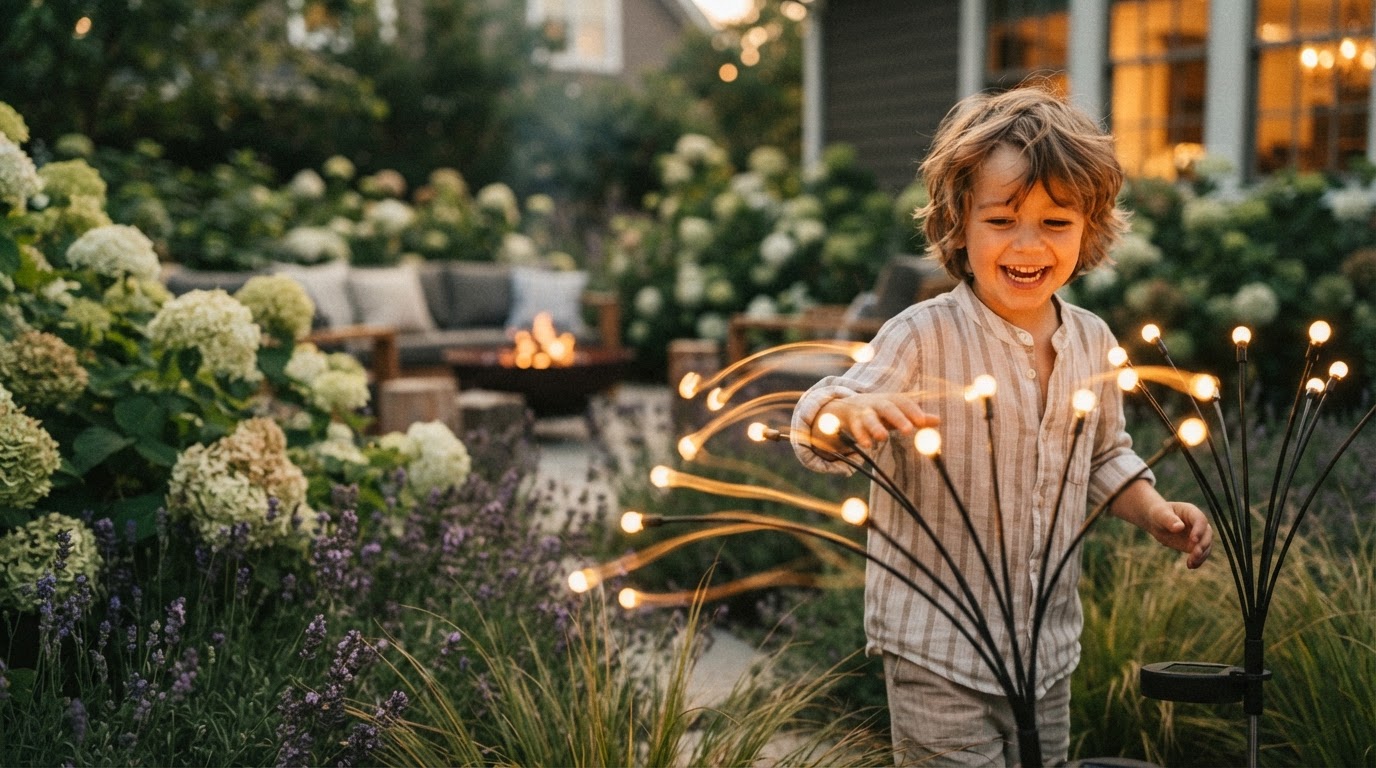
Solar Firefly Lights Setup for Wind-Driven Motion
 Priya RamanSenior Analyst
November 4, 2026 — The rising demand for kinetic garden aesthetics has positioned Solar Firefly Lights as a primary choice for homeowners seeking natural, wind-driven movement in their outdoor spaces. Unlike static fixtures from traditional brands like WAC Lighting, these units rely on environmental interaction to create a starburst swaying effect.
Modern landscape design now prioritizes dynamic elements that bridge the gap between hardscaping and organic growth. According to Kichler Lighting, effective path and spread lighting should enhance the natural flow of the environment, a principle that applies directly to how swaying fixtures are positioned. To achieve this, think of it as a matrix of flexibility and wind exposure. Two axes matter here: the physical tensile strength of the light stem and the aerodynamic placement within the garden's microclimate. By understanding these variables, you can transform a static yard into a rhythmic display.
The Dynamic Placement Framework
To maximize the kinetic potential of Solar Firefly Lights, users must evaluate the installation site based on three specific dimensions: clearance, stem tension, and wind corridors. Proper setup ensures the starburst swaying solar lights achieve their full range of motion without colliding with dense foliage or structural barriers. The technical specifications of these units are critical for performance. Most high-quality models feature an IP65 waterproof rating, ensuring durability during the heavy rain that often accompanies high winds. They typically utilize a high-capacity 600mAh to 1200mAh Ni-MH battery, providing 8 to 12 hours of runtime after a full day of solar exposure. The light heads are mounted on flexible, specialized wires designed to oscillate even in a light breeze of 3 to 5 miles per hour.
Effective integration requires placing the lights in areas where air currents are not obstructed by solid fences or heavy shrubbery. When selecting Solar Firefly Lights for wind-driven motion, the decision rule is to prioritize the "sway radius"—a 12-inch circular clearance around each stake. This prevents the individual LED bulbs from tangling, which is a common issue when solar garden lights that move in wind are clustered too tightly. For those integrating these into a larger design, solar swaying garden lights should be staggered in height to mimic the natural variation of a field of wheat or fireflies. Once you see it this way, the installation becomes a deliberate act of choreography rather than just illumination. Proper anchoring in the soil is also vital; the stake must be deep enough to resist the leverage of the wind while allowing the upper stem to remain pliable.
Expert tip: To maintain the peak flexibility of the swaying stems, wipe the support wires with a silicone-based protectant once per season to prevent UV-induced brittleness, ensuring the lights continue to move freely in low-velocity winds.
Achieving a seamless look involves balancing these kinetic fixtures with existing solar swaying garden lights to create layers of depth. By focusing on the intersection of technical durability and atmospheric conditions, you can ensure your landscape remains vibrant throughout the night.
Sources
- Swaying When Wind Blows, Solar Lights Outdoor Decorative, Color ...
- DIY Hacks & How To's: Wind Activated Lights - YouTube
- Landscape Lighting | Kichler Lighting