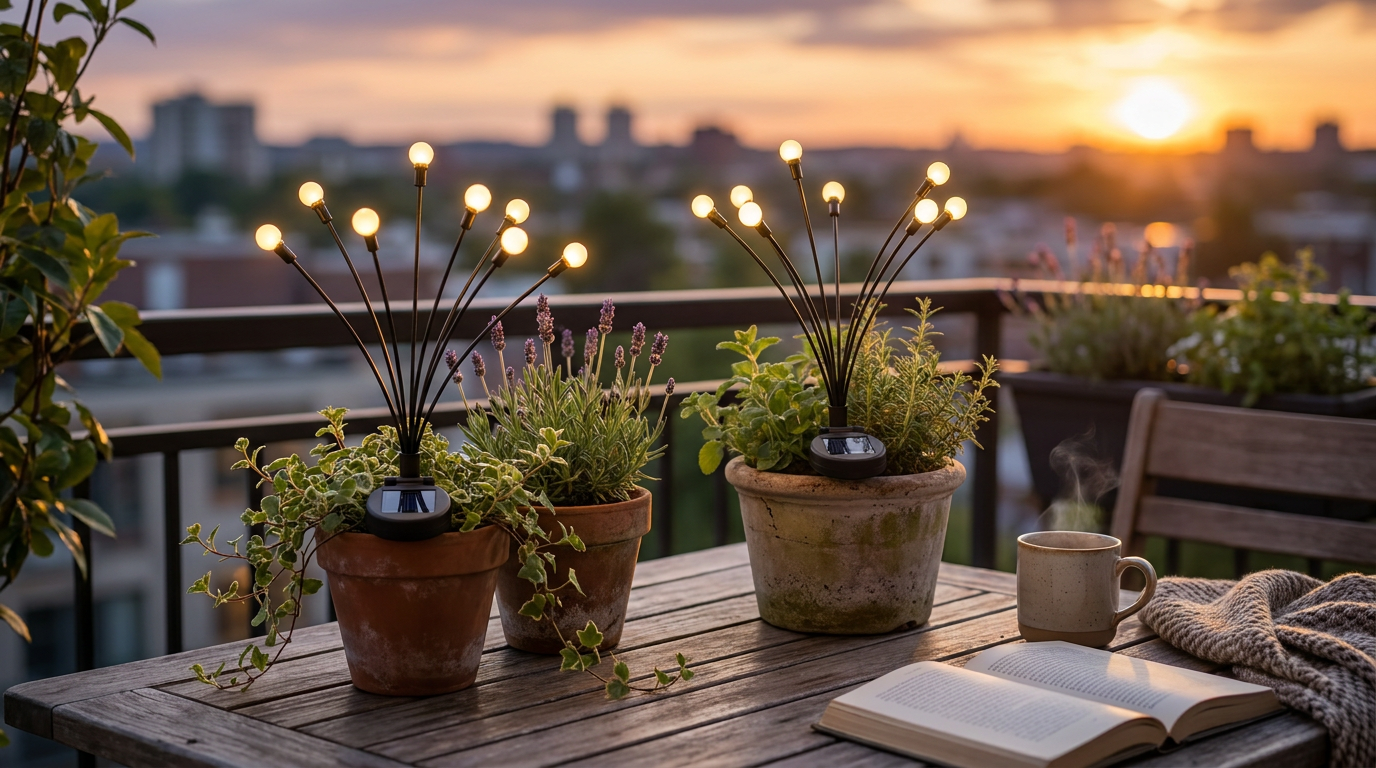
Can I use Solar Firefly Lights in small planters?
 Sam VasquezBuying Guide Lead
June 20, 2026 — Solar Firefly Lights are compatible with most standard planters provided the container is at least 10 inches deep to secure the stake and the solar panel receives roughly six hours of direct sunlight. Using these swaying lights in pots creates a dynamic focal point that adds vertical interest to balconies or porches.
How do you secure Solar Firefly Lights in potting soil?
To keep these lights stable, you need a firm substrate and enough depth to prevent the top-heavy LED stalks from leaning. Drip Depot notes that these lights typically come in small bouquets of six LEDs that sway in the breeze. This motion puts torque on the stake. If you are using loose, peat-heavy potting mix, tamp down the soil around the base or place a heavy decorative stone over the insertion point to prevent tipping during gusts.
Avoid 6-inch nursery pots as they look cluttered. Choose a wide 12-inch terra cotta pot or a tall planter. The extra surface area allows stalks to spread out, ensuring the "firefly" effect works without the bulbs tangling. Skip installation if your planter is located under deep eaves, as the integrated photocells require clear sky access to charge the internal batteries. Drainage is the planter-specific factor that ground installations never face. A pot that holds water after rain — blocked drainage holes, a saucer left full, dense unamended soil — keeps the buried stake section sitting in saturation for days, and that standing moisture is what corrodes stake joints and wicks up toward the wiring long before the IP-rated head ever fails. The checks are ordinary container-gardening hygiene: clear drainage holes, pots lifted on feet or ledges rather than sealed to the saucer, and soil that drains within hours rather than days. Winter compounds the issue in cold climates, because soil in an above-ground pot freezes harder and faster than ground soil in every direction at once — one more reason the freeze-season removal advice above matters doubly for container installations. A stake that spends its off-season dry in a garage will outlast an identical one left in a frozen, waterlogged pot by seasons rather than months.
What is the best placement for the solar panel in a container?

Photo by Myco Libot on Pexels
The integrated solar panel must be positioned at an angle that avoids being shaded by the plant's own foliage. Sunco Lighting specifies that their firefly lights use a dusk-to-dawn photocell. If the panel is buried under large hosta leaves or trailing ivy, the lights may turn on prematurely or fail to charge. Place the stake on the southern edge of the planter so the panel faces the sun while the LED stalks lean toward the greenery.
I recommend 6-LED bundles rather than 10-LED versions for containers. The 10-bundle versions often look like a clump of wires in a confined space. Smaller bundles maintain the airy look that makes Solar Firefly Lights stand out. You might also consider solar powered fairy lights for garden as a base layer, keeping the firefly lights as the primary height element. The plant sharing the pot is a design partner, and some partners work better than others. Ornamental grasses are the natural first choice — fountain grass or blue fescue moves in the same breeze that sways the light stalks, so the whole container animates together instead of the lights wiggling above a static shrub. Low, mounding fillers like sedum, creeping thyme, or trailing bacopa dress the pot's base while leaving the panel's sky view untouched. The partnerships to avoid are the vigorous ones: sweet potato vine, nasturtium, and their fast-growing kin will bury a panel in three good weeks, and tall upright plants like cannas turn the light stalks into understory. Scale is the final check — stalk height should roughly match or slightly exceed the mature plant height, so the fireflies hover over the foliage the way the name promises. A 30-inch stalk in a pot of six-inch annuals looks stilted; the same stalk rising through knee-high grass looks inevitable.
Quick answers

Photo by Lucas Pezeta on Pexels
Q: How many hours of light do they provide in a planter? A: Models from Sunco Lighting provide 8 to 10 hours of illumination after a full day of charging. In a planter, ensure no overhanging plants shade the panel, or duration will drop significantly.
Q: Are these lights waterproof for year-round outdoor use? A: Yes, quality units carry an IP65 waterproof rating, sufficient for rain. However, remove them from planters during freezing months to prevent stakes from becoming brittle.
Q: Can I use these in indoor planters? A: Generally, no. Standard indoor light is insufficient to trigger the charging cycle for the Ni-MH batteries.
For more layout ideas, see our guides on integrating solar firefly lights into container gardens and selecting solar powered fairy lights for garden setups.
Learn more about Solar Firefly Lights at https://solarfireflylights.com.
Rotating the display through the seasons
Container gardens get replanted two or three times a year, and the lights can either fight that rhythm or ride it. The practical sequence when swapping seasonal annuals: lift the light stake out first and set it aside — working trowels around an installed stake is how stems get bent and buried wiring gets nicked — then replant the pot, then re-seat the stake as the final step, adjusting its position to suit the new arrangement's heights and gaps. The stake's position deserves rethinking at each swap rather than automatic reinstallation in the old hole, since a spot that suited trailing summer petunias may sit wrong among upright fall mums.
The swap moments are also natural service intervals: with the stake in hand anyway, wipe the panel, check the stem joints, and glance at the battery compartment seal — thirty seconds of inspection three times a year, timed to work you were already doing. Containers make this easier than beds ever do, which is a quiet advantage of the planter approach: the entire installation is at waist height, in your hands, twice a season, whether you planned maintenance or not.