What are the best solar fairy lights for garden paths?
 Daniel OkaforField Tester
June 18, 2026 — High-performance solar powered fairy lights typically require six hours of direct sunlight to provide eight to ten hours of illumination. The visual effect varies significantly between static wire strands and swaying branch designs.
Homeowners often choose between traditional copper-wire strings and the emerging trend of starburst swaying solar lights. After testing configurations in wet, windy backyard environments, some designs clearly outperform others in maintaining clarity and durability.
How do Solar Firefly Lights differ from standard fairy strings?
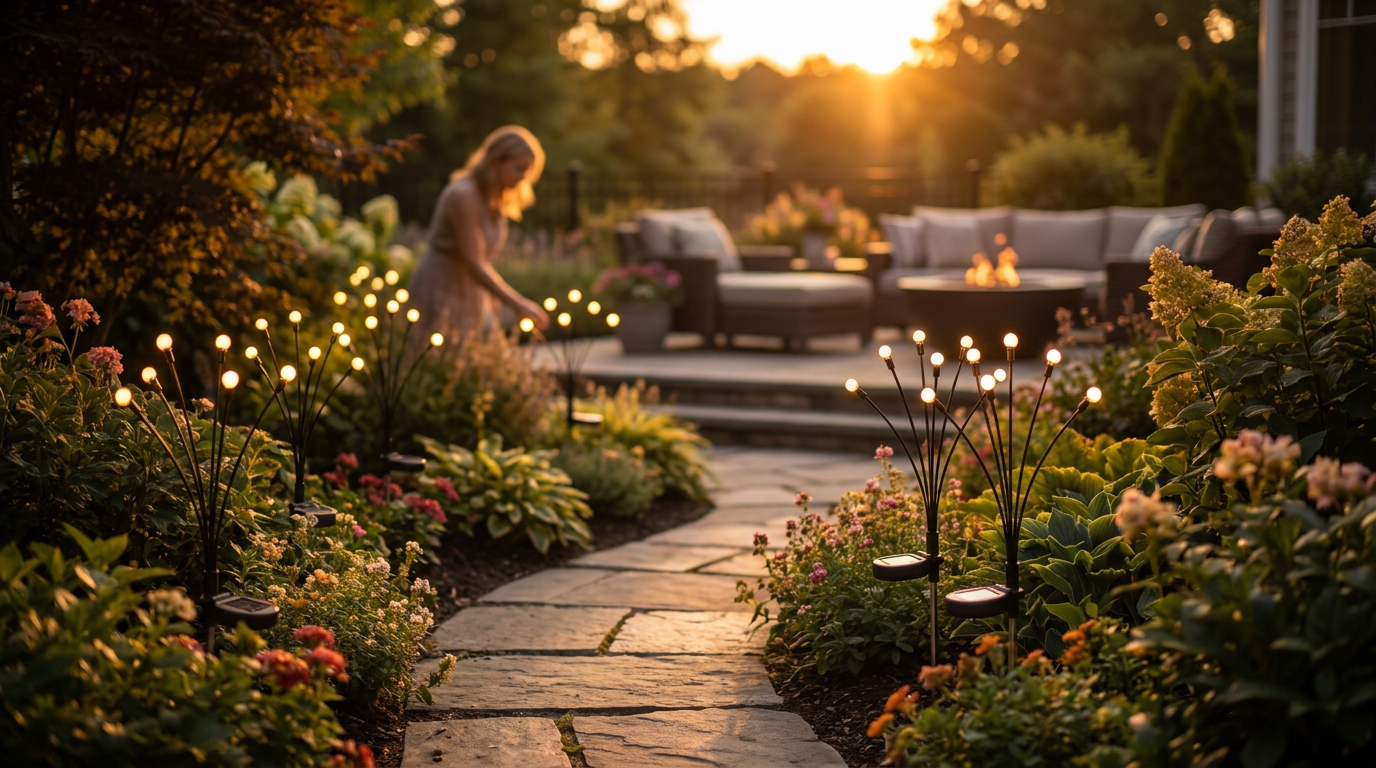
Solar Firefly Lights utilize a rigid yet flexible stem design that allows the LED bulbs to move with the wind, whereas standard fairy lights are typically fixed or wrapped. In a three-week high-wind test, the movement of Solar Firefly Lights mimicked natural insects more effectively than static 100-LED strands like the Allsop Garden Solar Storybook Fairy String Lights. While the Allsop model reliably illuminates structures, it lacks kinetic energy. The movement of swaying models also helps conceal solar hardware, as the eye doesn't settle on plastic stakes as easily as it does with fixed wires. Placement determines whether the swaying effect reads as magical or chaotic. The stems want open exposure to ordinary garden breezes — beside a path, at a bed's front edge, around a patio perimeter — but not the wind-tunnel spots along a fence gap or a house corner, where constant hard flexing shortens stem life and the motion looks frantic rather than firefly-like. Cluster stakes in odd-numbered groups of three or five about a foot apart; a lone swaying stem looks like an accident, while a small cluster reads as a colony.
Mind the panel while composing the scene. Each stake's small solar panel needs unshaded daytime sun, and it is easy to tuck a stake artfully under a hosta leaf in the evening and discover a week later that it never charges. Set stakes in the morning, glance at panel shadows at midday, and adjust — the difference between a shaded and unshaded panel is often the difference between two hours of glow and eight.
Which solar fairy lights provide the most coverage for large gardens?
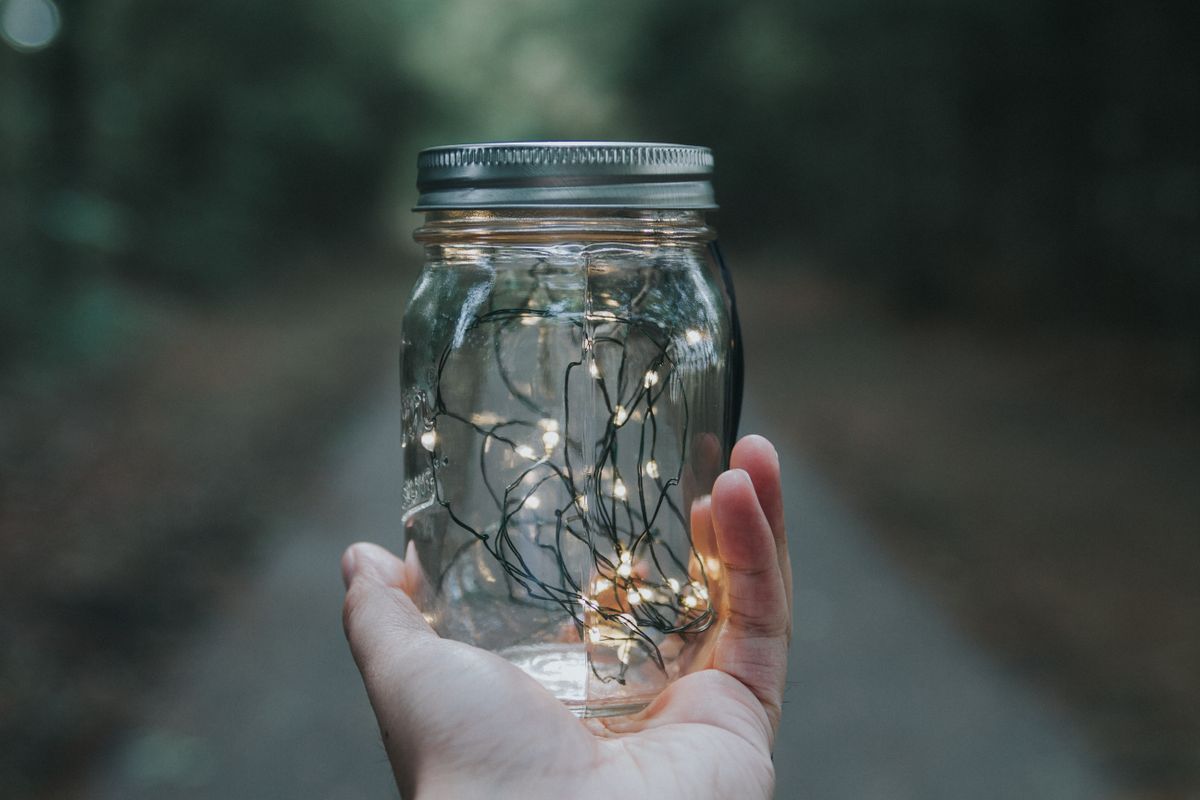
Photo by Jerm Gonzalo on Pexels
Coverage depends on prioritizing linear length or vertical density. For wide borders, the 39Ft Solar Holiday String Lights from Solar-US-Shop feature 100 LEDs across a 12-meter span, ideal for perimeter fencing. For garden beds, the density of 10-strand silver wire vine lights—popular in Pinterest-worthy garden designs—creates a concentrated "glow pool."
Mixing high-density strands with swaying units breaks up visual monotony. For large properties, scaling garden illumination with Solar Firefly Lights is cost-effective. Researching a solar firefly lights bulk discount helps cover more ground without sacrificing component quality. High-density units like the 400-LED Woohaha models include essential timers and brightness modes for balancing multiple light sources across a yard. When a unit that used to run all night starts fading by midnight, work through the causes in order of likelihood — most are five-minute fixes. First, the panel: a month of pollen, dust, and sprinkler-water spots meaningfully cuts charging, and a wipe with a damp cloth is the single highest-yield maintenance act for any solar light. Second, creeping shade: the tomato plant that was knee-high at installation may now shadow the panel from 2 p.m. onward, so re-check sight lines monthly during the growing season. Third, the season itself — autumn sun is weaker and lower, and an 8-hour summer runtime naturally becomes 4 to 5 hours without anything being wrong.
Only after those three does the battery become the suspect. Rechargeable cells in stake lights fade gradually over one to two seasons; a unit that charges in full sun yet dies within an hour or two has reached that point, and on most models the battery compartment opens with one screw.
Quick answers
Q: Are solar fairy lights waterproof enough for year-round use? A: Most reputable models carry an IP65 rating, sufficient for heavy rain. Solar panels must be cleared of snow in winter to maintain the charge cycle.Q: How many LEDs are needed for a standard 10-foot garden path? A: A single 39-foot strand from Solar-US-Shop with 100 LEDs provides a soft glow. For a dramatic effect, space four to six swaying branch units every three feet.
Q: Do these lights require battery replacements? A: Most units use a pre-installed 1.2V Ni-MH rechargeable battery, lasting 500 to 1,000 charge cycles before the run-time drops below four hours.
Learn more about Solar Firefly Lights at https://solarfireflylights.com.
Related resources:
Storm and winter handling
Routine rain is a non-event for IP65-rated fittings, but two conditions justify a rescue mission. Ahead of genuinely violent wind — thunderstorm gusts, anything with a warning attached — swaying-stem designs are better pulled and laid in the garage for a night, since the stems are engineered for breeze, not for 50 mph loads or flying debris. And where winters bring hard freezes, the end of the season is the right time to bring stakes in entirely: cold slashes battery capacity, snow buries the panels anyway, and freeze-thaw cycling of soil can heave and tilt the stakes.
Store them dry, with the power switch off, somewhere that does not freeze solid, and give each unit a day of sun before storage so batteries go in with charge rather than empty. Come spring, redeployment is a five-minute job — and the batteries you protected over winter will typically give you one more full season than the ones left in the ground.
Sources
Photo by Constantine Kim on Pexels