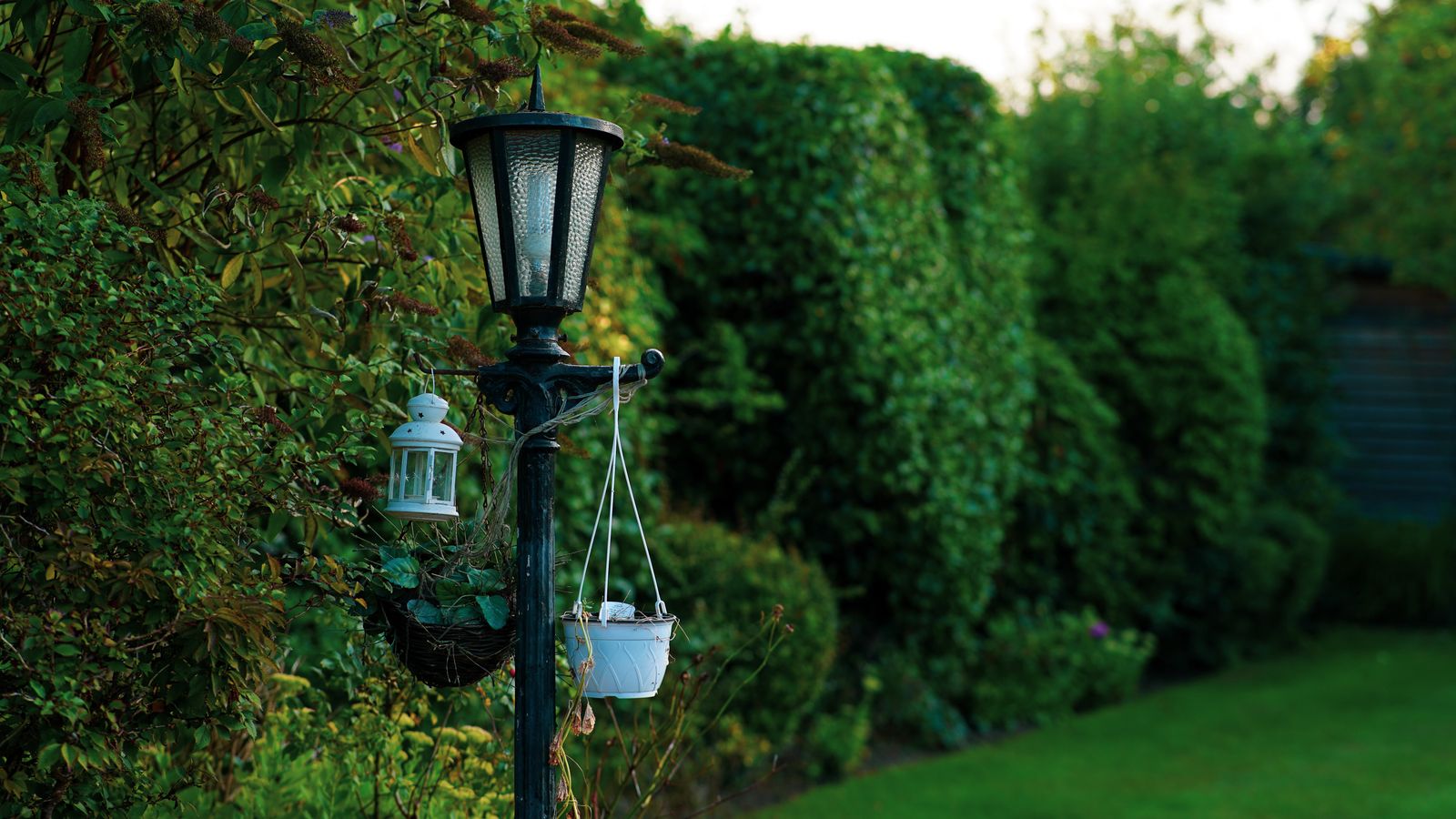
How Solar Dusk-to-Dawn Sensors Work: A Guide to Effortless Nighttime Garden Glow
Solar dusk-to-dawn sensors operate on a 5-lux illumination threshold. During the day, sunlight generates over 0.7 volts across the solar cell, driving a transistor gate to keep the LED circuit open. When ambient light drops below 5 lux at dusk, solar voltage collapses, closing the switch and drawing battery power to light the 32 or 64 warm LEDs automatically.
Essential Takeaways: Automation, Circuits, and Garden Illumination
- The 5-Lux Cutoff: Lights automatically activate when ambient light drops below 5 lux (natural twilight) and turn off when daylight exceeds 10 lux.
- 0.7V Transistor Gate: The solar panel itself acts as the light sensor, using a micro-transistor circuit rather than a separate photocell component.
- Zero Daytime Battery Drain: Keeping the internal switch set to 'ON' allows sunlight to charge the 1.2V Ni-MH battery without consuming any stored energy during daylight hours.
- 10-Foot Distance Rule: Positioning garden stakes at least 10 feet away from high-lumen streetlights prevents artificial light glare from suppressing sensor activation.
Technical Specifications: Sensor Thresholds & Electrical Properties
Photo by JINU JOSEPH on Pexels
| Parameter | Technical Specification | Operational Threshold | Impact on Garden Ambience |
| --- | --- | --- | --- |
| Sensing Activation Threshold | < 5 Lux (Twilight) | Triggers transistor gate to CLOSE circuit | Illuminates firefly bulbs seamlessly as evening settles |
| Sensing Deactivation Threshold | > 10 Lux (Dawn) | Triggers transistor gate to OPEN circuit | Extinguishes LEDs and engages daytime battery charging |
| Photovoltaic Switching Voltage | 0.7 Volts DC | Critical gate threshold for NPN/PNP transistor switch | Prevents premature flickering during gradual sunset transitions |
| Battery Charging Circuit | 1.2V Ni-MH Cell | Directs 6–8 hours of solar absorption into stored power | Sustains continuous warm 2700K illumination across the night |
| LED Bulb Output Options | 32 LEDs (4-Pack) / 64 LEDs (8-Pack) | Warm LED Firefly Glow | Delivers gentle, swaying light stems across outdoor landscape beds |
Review the core electrical thresholds and optical values governing automatic dusk-to-dawn outdoor solar lighting.
Visualizing the Sensor Circuit: Day Charging vs. Night Illumination Flow
Expert Placement Rule: Eliminating Light Pollution Interference
To ensure your firefly lights sway into life the moment twilight descends, maintain a strict 10-foot buffer distance between the solar panel module and any artificial light emitting over 10 lux—such as bright porch lights or streetlamps. If high artificial glare strikes the panel face at night, the sensor reads it as fake daylight (>0.7V signal), holding the circuit open and keeping the LEDs dark. If space is tight, angle the panel 15 degrees away from street illumination toward open southern sky to catch maximum daytime sun while remaining sheltered from nocturnal glare.
Diagnostic & Troubleshooting Matrix: Common Sensor Behaviors
| Scenario / Symptom | Root Cause | Electrical / Lux Trigger | Recommended Solution |
| --- | --- | --- | --- |
| Scenario 1: Stake lights fail to turn on at sunset. | Nearby streetlight or bright porch light shining directly on solar panel. | Ambient light on panel exceeds 5 lux (>0.7V solar panel voltage output). | Relocate stake 10 feet away from glare, or angle solar panel downward away from direct beam. |
| Scenario 2: Firefly lights flicker rapidly right at dusk. | Panel located on extreme transition boundary between light and shadow. | Ambient light hovering precisely at 5 lux threshold (0.68V–0.72V edge fluctuation). | Shift stake 12 inches deeper into shade zone to establish a clean, decisive darkness threshold. |
| Scenario 3: Lights turn on during afternoon daylight hours. | Stake placed under dense evergreen tree canopy or deep porch shade. | Daytime ambient illumination falls below 5 lux due to physical blockage. | Move stake to open soil receiving 6 to 8 hours of direct, unobstructed sunlight daily. |
| Scenario 4: LEDs light up briefly then shut down after 1 hour. | Internal Ni-MH battery did not receive adequate daytime charge. | Battery voltage drops below 1.0V operational minimum under load. | Wipe panel clean of pollen/dust; ensure switch remains ON during 8 hours of direct solar exposure. |
Diagnose ambient lighting issues, false triggers, or flickering behaviors using scenario-based electrical triggers.
Automation Decision Guide: Solar Sensors vs. Alternative Controls
Self-contained solar dusk-to-dawn sensors eliminate external timers, smart plugs, and trenching while adjusting automatically to shifting seasonal sunsets.
Best choice for
- Integrated Solar Dusk-to-Dawn Sensors — Requires zero wiring, adapts dynamically to changing dusk hours, and operates 100% off free solar energy.
- Remote Solar Panel with Extension Cord — Allows placement of the sensing solar panel in open sunlight while the light stakes stay in shaded garden beds.
- You require high-lumen security floodlighting that runs at 100% intensity regardless of weather or daytime charge.
- The installation spot sits directly under a high-intensity 100W streetlamp emitting over 10 lux continuously.
- Low-Voltage Hardwired Transformers with Digital Timers — Best for high-wattage architectural floodlights requiring fixed clock-based scheduling, though installation requires trenching cables.
Recommended Solution: Swaying Solar Firefly Lights
Bring an ethereal, automated glow to your garden borders and pathways with weather-resistant solar firefly stake lights.
Understanding how outdoor solar lights know exactly when to turn on at night reveals an elegant piece of solid-state electronic engineering. Rather than relying on separate optical photo-resistor sensors (often called LDRs) that add hardware complexity, modern outdoor solar lights utilize the solar panel itself as the dual-purpose charge collector and light detector.
How the Solar Panel Acts as its Own Sensor
During daylight hours, photons hitting the monocrystalline or polycrystalline solar cell liberate electrons, creating a direct current (DC) electrical potential. When ambient light exceeds 10 lux, the panel generates between 1.2 to 2.0 volts DC. This voltage flows through a blocking diode to charge the internal 1.2V Ni-MH battery. Simultaneously, this voltage applies positive bias to the base of a PNP micro-transistor integrated into the control chip.
As long as the base voltage remains above the 0.7-volt silicon junction threshold, the transistor gate stays open (OFF position for the lighting loop), blocking power from reaching the LED bulbs. The internal switch can remain set to 'ON' perpetually because daytime power flows exclusively from the panel into the battery.
The Dusk Transition (The 5-Lux Threshold)
As the sun dips below the horizon, natural ambient daylight drops rapidly across the color spectrum. When light intensity falling on the panel surface drops below 5 lux, solar cell voltage output collapses below the critical 0.7V transistor bias limit:
Because this process relies entirely on solid-state semiconductors, there are no moving mechanical switches or internal gears to wear out over time. The transition feels organic, warm, and natural—mirroring the quiet onset of twilight across your garden landscape.
Solar Panel Voltage Sensing vs. Standalone LDR Photo-Resistor Chips
Photo by Artūras Kokorevas on Pexels
| Scenario / Performance Criteria | Solar Panel Voltage Sensing (Integrated) | Standalone LDR Photocell Chip | Operational Winner |
| --- | --- | --- | --- |
| Scenario 1: Weather Resistance & Moisture Exposure | Completely sealed inside panel module housing with IP65 silicone seals. | Requires exposed glass/plastic window vulnerable to water entry. | Solar Panel Sensing (Higher Long-Term Durability) |
| Scenario 2: Low-Lux Precision & Dusk Sensitivity | Triggers cleanly at 5 lux as panel voltage output drops below 0.7V. | Resistance changes gradually; can cause faint LED flickering. | Solar Panel Sensing (Cleaner On/Off Threshold) |
| Scenario 3: Physical Footprint & Visual Design | Zero extra components on stake head; clean aesthetic look. | Requires visible sensor eye hole on the exterior casing. | Solar Panel Sensing (Sleeker Aesthetic Design) |
| Scenario 4: Component Lifespan & Failure Rates | Solid-state silicon solar cells last 5+ years without degradation. | Cadmium sulfide photo-resistors degrade under intense UV sunlight over 2–3 years. | Solar Panel Sensing (Greater UV Longevity) |
Compare scenario performance between panel-integrated sensing circuits and legacy LDR sensor chips.
Top 5 Sensor Placement Errors That Disrupt Dusk-to-Dawn Automation
Avoid these common garden lighting mistakes to ensure your solar firefly lights turn on reliably every single night:
Frequently Asked Questions About Solar Dusk-to-Dawn Sensors
Next Steps: Optimizing Your Outdoor Ambience Effortlessly
Your decision: Determine if your intended garden placement receives 6–8 hours of direct daytime sun and stays under 5 lux after dark for reliable automatic operation.
Do this next: Audit your target garden border or pathway for nearby light pollution, set your solar firefly light switches to 'ON', and allow 6–8 hours of direct sun prior to your first evening display.
- Read next: Why Won't My Solar Lights Turn On at Night? Dusk-to-Dawn Sensor Troubleshooting Guide
- Read next: Dusk-to-Dawn Solar Sensors vs. Hardwired Timers: Which Is Best for Outdoor Ambience?
Transform your evening landscape with automated, swaying warmth. Order Solar Firefly Lights (Available in 4-Pack/32 LEDs or 8-Pack/64 LEDs) at https://solarfireflylights.com!
Further Reading & Deep Dives into Solar Landscape Tech
Guide readers to internal links within the cluster and pillar.
Cover photo by JINU JOSEPH on Pexels.