Dusk-to-Dawn Solar Lights vs. Manual Timers: Ambient Garden Lighting Comparison
Should you install solar lights with built-in dusk-to-dawn sensors or hardwire a low-voltage system with a manual timer? For ambient garden accent lighting, solar dusk-to-dawn sensors are superior. They require zero trenching or wiring, cost nothing to power, and automatically adjust to shifting twilight year-round without clock drift or seasonal reprogramming.
Control Comparison: Dusk-to-Dawn Solar Sensors vs. Hardwired Timers by Lighting Scenario
| Lighting Scenario | Dusk-to-Dawn Solar Sensors | Hardwired Manual/Clock Timers | Winner for Ambient Yards |
| --- | --- | --- | --- |
| Seasonal Sunset Shifts (Summer vs. Winter) | Integrated optical sensor triggers illumination at exact natural twilight daily. | Fixed clock triggers at static times; requires manual seasonal adjustments as days lengthen or shorten. | Dusk-to-Dawn Solar |
| Pathway & Bed Installation Effort | Tool-free stake installation in soft ground; zero electrical permits, trenching, or wiring. | Requires digging 6–12 inch trenches, running low-voltage cable, and mounting an outdoor transformer. | Dusk-to-Dawn Solar |
| Grid Reliability & Power Outages | Operates independently on stored solar energy; completely immune to neighborhood blackouts. | Analog timers lose time during power cuts; digital units require battery backup resets. | Dusk-to-Dawn Solar |
| Shaded Corners & Deep Canopy Coverage | Requires 6–8 hours of ambient solar radiation during daylight for full nighttime runtime. | Operates reliably on household grid power regardless of overhead shade or porch overhangs. | Hardwired Timer |
| Custom Shut-Off Scheduling (e.g., Off at 11 PM) | Stays lit continuously from dusk until stored battery energy depletes at dawn. | Allows precise minute-by-minute off-times via mechanical pins or digital scheduling. | Hardwired Timer |
Compare how solar photocell sensors and hardwired mechanical timers perform across common real-world outdoor lighting situations.
Pros and Cons: Evaluating Failure Modes, Costs, and Flexibility
Pros
- Automatic twilight synchronization eliminates seasonal timer maintenance.
- Zero electricity costs and zero wire-trenching labor.
- Tool-free installation allows effortless garden layout changes.
- Flexible, swaying stems add an organic, firefly-inspired movement to landscape beds.
- Primary Failure Mode: Deep daytime shade from dense foliage or eaves drastically reduces battery charge.
- Secondary Failure Mode: Direct exposure to bright floodlights or streetlights tricks the photocell into staying off.
- Cannot set a specific early shut-off hour (e.g., turn off at midnight).
The Verdict: Best Choice for Ambient Garden Illumination
For homeowners seeking cozy, enchanting garden lighting without electrical complexity, Solar Firefly Lights with built-in dusk-to-dawn sensors deliver unmatched value. Their dynamic optical sensors automatically glow at twilight, casting a warm LED light across flexible stems that sway gently in the breeze.
Ready to transform your garden into an enchanting evening oasis without electrical wiring or timer hassle? Order your Solar Firefly Lights today and let dusk automatically trigger a warm, magical glow.
Which Outdoor Lighting Control Suits Your Yard?
- Do you want to install lights without digging trenches or hiring an electrician? → Yes: Choose Solar Dusk-to-Dawn Sensors. No: Continue to next question
- Will the lighting location receive 6 to 8 hours of daylight exposure? → Yes: Choose Solar Dusk-to-Dawn Sensors for zero-cost automatic twilight activation.. No: Choose a Hardwired Timer System to supply grid power into dense shade.
Next Steps to Transform Your Outdoor Space
Your decision: Choose Solar Firefly Lights with integrated dusk-to-dawn sensors for zero-wiring, low-maintenance landscape illumination.
Do this next: Measure your garden border or walkway length and choose between the 4-pack (32 LEDs) for small accent zones or the 8-pack (64 LEDs) for full framing.
- Read next: How Solar Dusk-to-Dawn Sensors Work
- Read next: Solar Firefly Lights vs. Traditional Fixed Pathway Lights
Solar Firefly Lights 8-Pack (64 LEDs) for full, lush pathway framing.
Follow these simple steps to select and position your outdoor accent lighting for maximum evening impact.
Key Takeaways: Core Differences at a Glance
- Dusk-to-dawn solar sensors activate automatically based on natural light levels, requiring zero manual timer adjustments across seasons.
- Hardwired timer systems carry high upfront costs ($300–$1,200) for transformers, underground cables, and installation labor.
- Primary failure mode for solar sensors is daytime shadow interference; primary failure mode for hardwired timers is wire damage from lawn maintenance.
- Solar firefly lights feature flexible stems that sway in the wind, introducing dynamic organic movement unavailable in rigid low-voltage fixtures.
- Solar lights operate independently of the household power grid, ensuring your garden stays illuminated during utility blackouts.
Decision Matrix: Evaluating Your Yard's Lighting Needs
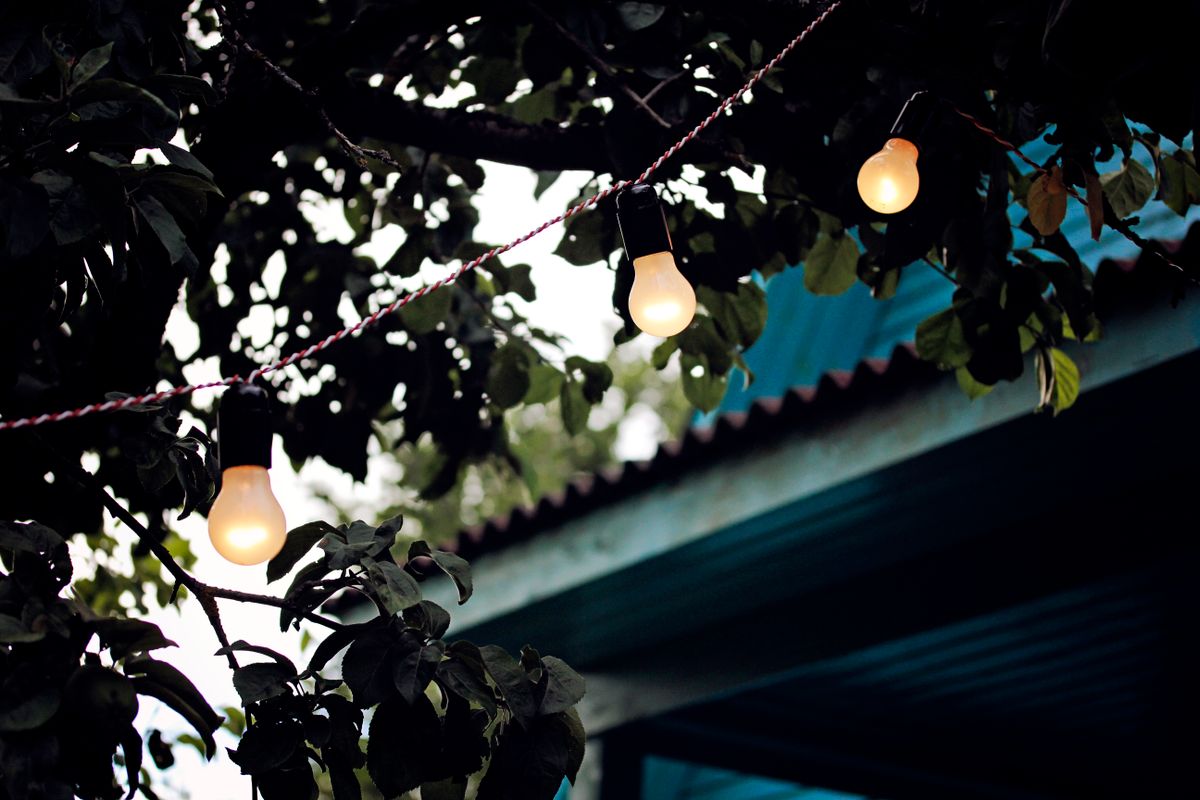
Photo by Elviss Railijs Bitāns on Pexels
Choose dusk-to-dawn solar lights for zero-effort, tool-free installation and organic seasonal adaptation. Choose hardwired timers if lighting areas under heavy perpetual shade.
Best choice for
- Solar Dusk-to-Dawn Sensors — Provides tool-free placement and automatic activation at exact sunset.
- Hardwired Low-Voltage Timers — Supplies constant electrical power where sunlight cannot reach solar panels.
- Placing solar lights directly beneath high-intensity security floodlights that prevent photocell activation.
- Solar Firefly Lights 4-Pack (32 LEDs) — Ideal for smaller patio borders or accenting discrete garden urns.
- Solar Firefly Lights 8-Pack (64 LEDs) — Best for complete framing along 25–30 ft landscape pathways.
Recommended Solution: Solar Firefly Lights for Effortless Ambience
Bring a warm firefly glow to your outdoor space with these solar-powered garden stake lights. Designed for gardens, yards, patios, pathways, walkways, driveways, flower beds, and landscape decor, these outdoor solar lights charge during the day and automatically illuminate at night.
- Auto Dusk-to-Dawn Design: Built-in optical sensor turns lights on at twilight with no wiring required.
- Firefly-Inspired Glow: Flexible stems gently sway in the breeze for a natural, dancing light effect.
- Outdoor Ready: IP65 waterproof rating withstands rain, snow, heat, and wind.
- Pack Options: Available in a 4-Pack (32 warm LED bulbs) for cozy accent borders or an 8-Pack (64 warm LED bulbs) for fuller, brighter walkway displays.
Real-World Installation Scenarios & Failure Analysis
Daylight Saving Time & Seasonal Shift — Dusk-to-dawn solar sensors adapt instantly as sunset shifts from 8:30 PM in July to 5:00 PM in November. Hardwired mechanical timers require manual dial adjustments twice a year to avoid turning lights on in broad daylight.
Accidental Lawn Care Damage — Hardwired systems use buried low-voltage cables vulnerable to edgers, aerators, and shovels. Repairing buried wire shorts requires specialized equipment. Solar stakes have no interconnected underground wires, eliminating line-cut risks entirely.
Severe Summer Storms & Power Outages — When grid power drops during severe weather, hardwired timer systems go dark. Solar firefly lights, equipped with IP65 weather-resistant housings and internal batteries, illuminate normally as soon as storm clouds clear at dusk.
How solar sensors and hardwired timers hold up under everyday garden conditions.
Creating an inviting outdoor space requires balancing aesthetic warmth, installation labor, and ongoing maintenance. While traditional landscape lighting relies on transformers and hardwired timers, modern solar dusk-to-dawn technology offers an elegant alternative designed around natural rhythms.
The Cost & Labor Equation: Hardwiring vs. Solar Stakes
Installing a traditional low-voltage landscape lighting system with a central wall timer requires significant preparation. Homeowners must calculate transformer wattage, buy heavy-gauge underground cable, and dig 6-to-12-inch trenches across lawns and root zones. On average, a basic hardwired pathway setup costs between $300 and $1,200 in equipment and professional labor. Furthermore, any future garden redesign requires re-trenching lines.In contrast, solar firefly lights eliminate upfront installation costs entirely. Each stake is self-contained with its own solar panel, rechargeable battery, and light sensor. You simply press the stake into soft soil where the panel receives direct sunlight. If you plant new perennials or change your patio layout next season, moving your solar lights takes seconds.
Seasonal Twilight Tracking vs. Clock Drift
One of the most frequent frustration points with hardwired manual or digital timers is clock drift. Mechanical timers rely on fixed wheel rotations, while digital timers execute rigid time schedules. As sunset naturally shifts across the summer and winter solstice, static timer settings fall out of sync with actual darkness. In midsummer, fixed timers turn lights on while the sun is still high; in winter, they leave walkways dark for hours after twilight.Built-in dusk-to-dawn solar sensors operate organically. Equipped with sensitive cadmium sulfide photocells or phototransistors, they measure ambient lux levels in real time. The moment twilight drops ambient light below daytime thresholds, the internal switch closes, illuminating the LEDs. There are no clocks to program, no seasonal adjustments to remember, and no clock memory loss following grid outages.
Understanding System Failure Modes
To make an informed decision, homeowners must evaluate how each system fails over time:By keeping solar panels clear of heavy debris and placing stakes away from direct floodlights, solar firefly lights provide years of hassle-free evening glow.
Aesthetic Impact: Rigid Fixtures vs. Swaying Fireflies
Beyond electrical mechanics, control choices directly shape garden atmosphere. Traditional hardwired lights feature heavy aluminum or brass hats that cast static down-light onto pavement. While functional, they remain rigid and motionless.Solar Firefly Lights utilize clusters of warm LED bulbs mounted on ultra-flexible stems. As evening breezes sweep through flower beds and grass borders, the light stems sway softly, mimicking the delicate, ethereal dance of fireflies on a summer night. Coupled with automatic dusk activation, your outdoor sanctuary transitions seamlessly into a cozy, enchanting haven every evening.
Explore Related Guides & Resources
- Solar Firefly Lights Product Catalog