How to Choose the Best Solar Pathway Lights for a Magical Garden Walkway
The best solar pathway lights for a magical garden walkway are solar garden stakes that charge 6-8 hours in sun, come on at dusk, and run 8-10 hours with a warm firefly glow rather than a white flood. Solar Firefly Lights skip wiring, use flexible stems that sway in a breeze, and pack 32 warm LEDs in a 4-pack or 64 in an 8-pack. Stake them into soft ground where each panel sees the sky, then let dusk-to-dawn handle the night.
Magical walks use points of warm light, not a runway
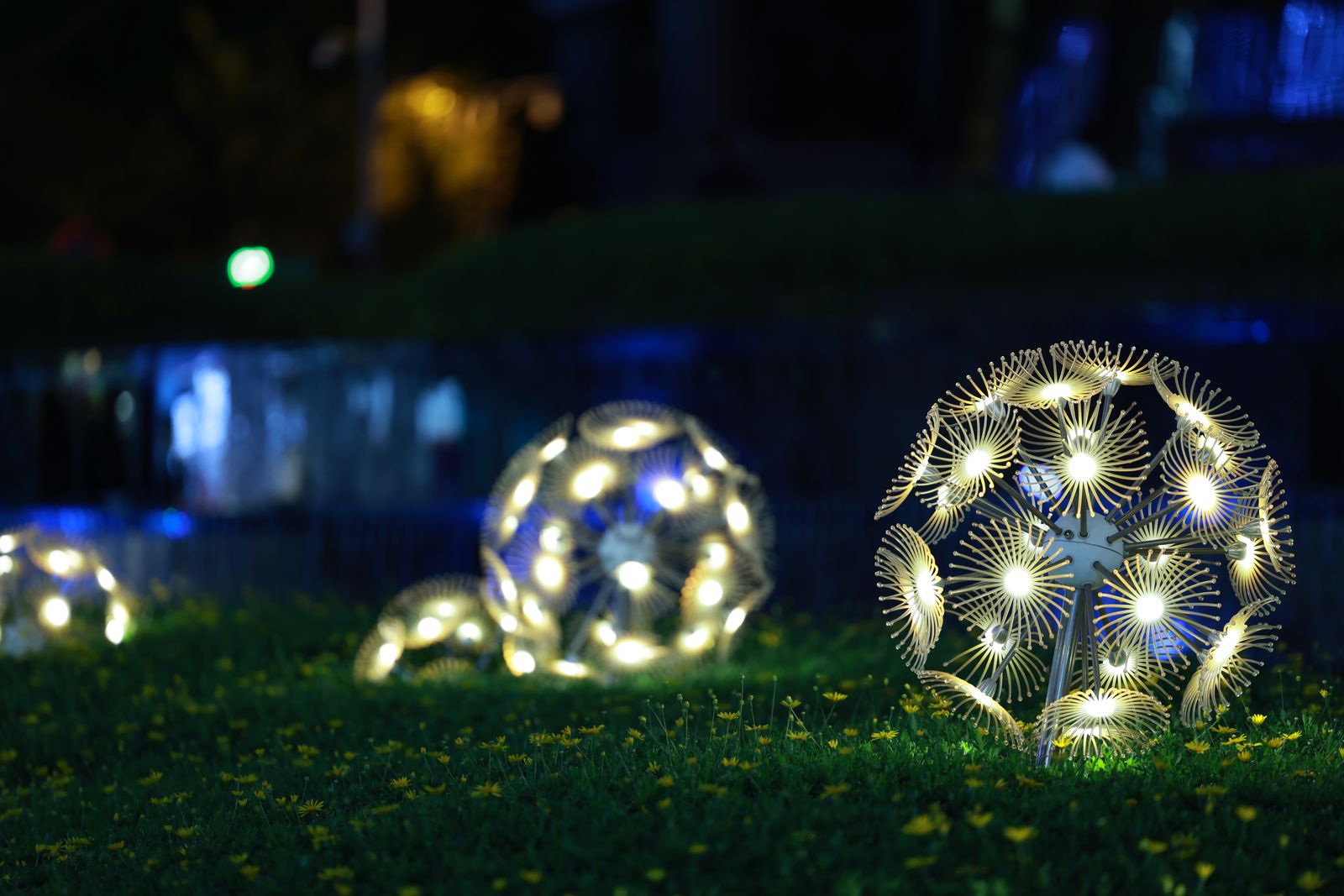
A walkway feels enchanted when the light is a scatter of warm points at plant height, not a row of bright pucks that show every crack in the pavers. Solar pathway lights for garden walkways should read as living glow along the edge, the way fireflies sit in a bed, not as street lighting scaled down for a patio.
Harsh white floods make the path safer in a parking-lot sense and worse in a garden sense. They flatten texture, wash out flowers, and glare into windows. Warm LEDs on flexible stems keep the light low, moving, and soft. That is the buying filter: ambience first, with enough glow to see the next stepping stone.
Driveways and walkways are listed uses, still as decorative landscape light. If the path is a true trip hazard, add a separate task light and keep firefly stakes for the planted edge. The pathway performance standards for solar firefly lights map that split.
Buyer checks that actually change the night

Photo by Matheus Bertelli on Pexels
Start with power. Solar powered stakes that charge 6-8 hours in direct sun and run 8-10 hours after dusk cover a full evening without a timer app or a trench. Auto dusk-to-dawn design is the simple version of that: the lights come on when the sky darkens and rest when morning returns.
Next is install. Easy installation means a stake into soft ground and a panel that can see the sun. No wiring is the point. If a listing asks for a transformer, it is a different product family.
Then count glow, not boxes. A 4-pack is 32 warm LED bulbs. An 8-pack is 64. Magical density is more LEDs along the walk, not one lonely stem every ten feet. Waterproof and outdoor ready is the weather bar for garden and path use. Outdoor ready means they live outside, not in a standing puddle.
How a 4-pack and an 8-pack map to a walk
A short garden walk beside one bed can look complete with a 4-pack if the 32 LEDs sit in clusters, not as four isolated sticks. A longer path that turns past a patio and a second bed usually wants an 8-pack of 64 LEDs, or a 4-pack plus an 8-pack if both edges need glow.
Buy for the sunlit edge, not for every dark corner under a dense hedge. A panel in shade will not finish a 6-8 hour charge, and the 8-10 hour night will come up short. Walk the route at midday. Mark where sky actually hits the soil.
Flexible stems are the firefly cue. They should sit among plants so a breeze can move them. Stakes lined like fence posts look like hardware. Stakes nested in foliage look like a swarm.
Pathway light types for a garden walk
| Type | Night look | Best use | | --- | --- | --- | | Solar firefly garden stakes | Warm points that sway | Magical edge along beds and walks | | Static solar path pucks | Even white pools | Utility walks, less garden mood | | Wired low-voltage path lights | Steady beams, trench work | Permanent hardscape, not a weekend install | | String lights overhead | Ceiling of light | Patio dining, not the path surface | | Solar flood stakes | Harsh wash | Wall accents, not a walkway swarm |
Stake where the panel can work
Installation is a soil and sun problem. Soft ground takes the stake. Hard clay needs a loosened pocket so the post does not bend. Keep the solar panel in the open. A pretty nook under a hosta is a charging miss.
After the first dusk, walk the path once. Dark units are usually shade, dirt on the panel, or a stake that never saw a full 6-8 hour day. Wipe the panel. Move the unit. Do not add more packs to a shaded strip and expect a fuller night.
Garden walkway solar light buying checklist
- [ ] Walk the path at noon and mark sunlit soil.
- [ ] Choose warm firefly stakes over white floods for garden mood.
- [ ] Count LEDs: 32 in a 4-pack, 64 in an 8-pack.
- [ ] Cluster stems along the planting edge, not in a rigid grid.
- [ ] Stake into soft ground with the panel in the sky.
- [ ] Confirm dusk-to-dawn on after a 6-8 hour charge day.
Frequently asked questions
Are solar pathway lights bright enough for a garden walkway?
They are ambient lights. Warm firefly LEDs show the edge of the walk. They are not a parking-lot flood. Pair with a separate task light if the route is a true trip hazard.
How long do they stay on after dusk?
After a 6-8 hour charge in sun, nightly run time is 8-10 hours on a dusk-to-dawn cycle.
Do they need wiring or a timer?
No. Solar Firefly Lights are solar powered with auto dusk-to-dawn design and no wiring.
Is a 4-pack or an 8-pack right for a typical walk?
A short bed-lined walk can start with 32 LEDs in a 4-pack. A longer path or both edges usually wants 64 LEDs in an 8-pack.
Can they sit along a driveway as well as a garden path?
Yes. Listed uses include gardens, yards, patios, pathways, walkways, driveways, and flower beds, with the panel in sun and the stake in soft ground.
Related reading
Walkway layout, stake setup, and dark-path tactics sit next to this buying filter.
- solar firefly lights for garden walkway decorations
- how to set up solar garden stake lights
- high-impact solar stake lighting for dark pathways
What to do next
Walk the route at midday, mark sunlit soil along the planting edge, and stake a 4-pack or 8-pack of Solar Firefly Lights there so the 32 or 64 warm LEDs can charge 6-8 hours and glow 8-10 hours after dusk.