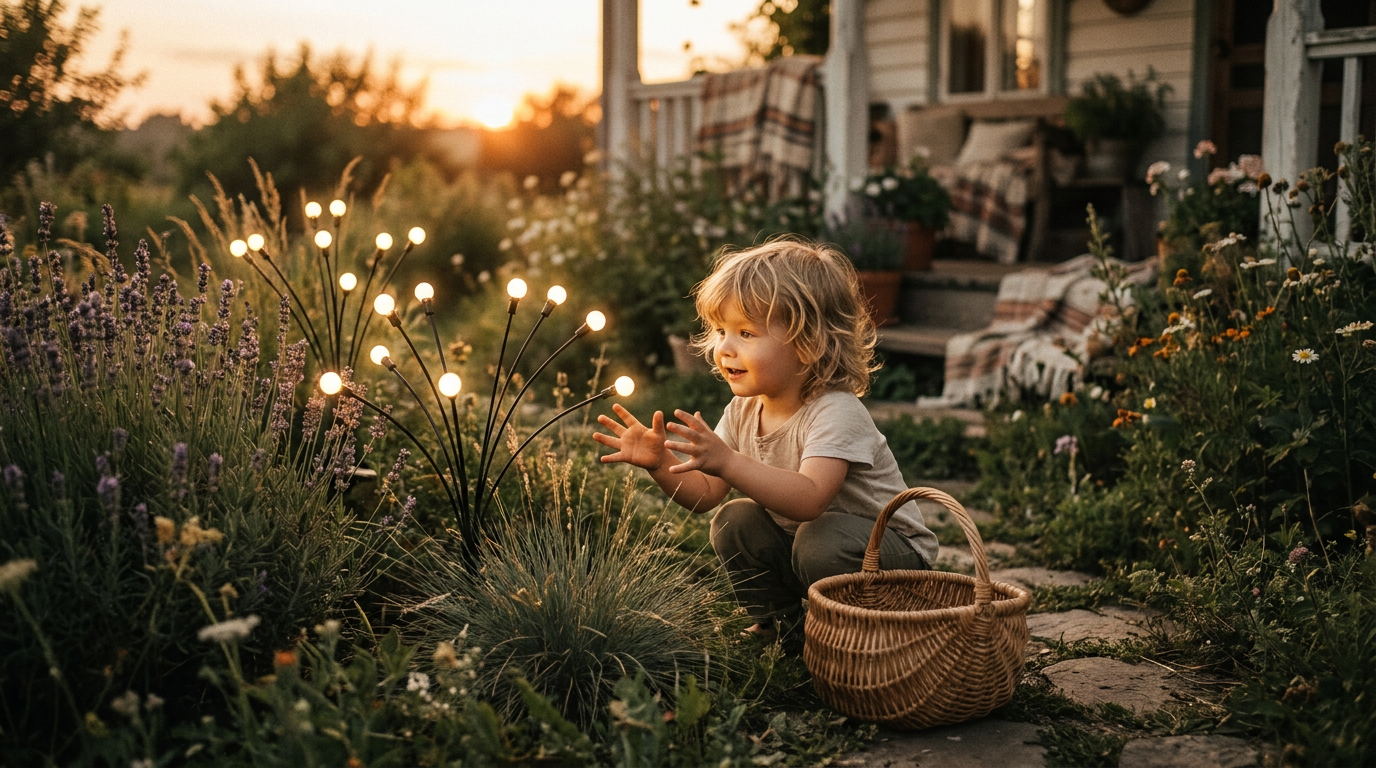
How do Solar Firefly Lights create a warm white glow?
 Jordan HaleStaff Writer
June 18, 2026 — Solar Firefly Lights produce a warm white glow by utilizing high-efficiency LEDs with a color temperature typically between 2700K and 3000K, powered by integrated monocrystalline solar panels.
Homeowners seek this 3000K spectrum because it mimics the natural bioluminescence of Lampyridae rather than the clinical blue of traditional outdoor security lighting. Achieving this balance requires specific diode coatings and precise distance between the light source and the ground.
Why is the warm white spectrum preferred for Solar Firefly Lights?
The warm white spectrum enhances natural greens and earthy browns without the visual distortion caused by cool-toned LEDs. This 2700K to 3000K range prevents the "flattening" of landscape textures at night. According to product specifications for the Luma Solar Swaying Garden Lights found at Kiyo Home, these units utilize warm white LEDs to ensure the design feels organic.
The specific light temperature is also discussed in our Solar Firefly Lights Warm White Comparison Analysis, which explores how different brands manage light diffusion. Because the LEDs are mounted on flexible stems, the warm light drifts, creating a firefly effect explained further in our post on how Solar Firefly Lights achieve a swaying motion. The weight of the bulb base, often reinforced in "upgraded" models, ensures the sway remains rhythmic, maintaining a steady presence. How that spectrum actually reads at night depends heavily on what sits behind it. Warm white point-lights pop against dark backdrops — deep green shrubs, a stained fence, an unlit stretch of lawn — where each diode registers as a distinct floating ember. Against a pale house wall or a bright patio, the same lights half-vanish, their glow absorbed into the ambient wash. Walking the yard at night with a flashlight cupped in your hand is a cheap way to preview this: wherever the small glow reads clearly is where the fireflies will sing. Viewing distance sets the character too — from a patio chair ten feet away the individual bulbs and their sway are the show, while from a kitchen window across the yard the cluster merges into a soft shimmer, so place close-range clusters where people sit and mass plantings where they gaze. Bright moonlit nights will always mute the effect; that is not a defect but the same physics that hides real fireflies on a full moon.
How does solar charging affect light consistency?
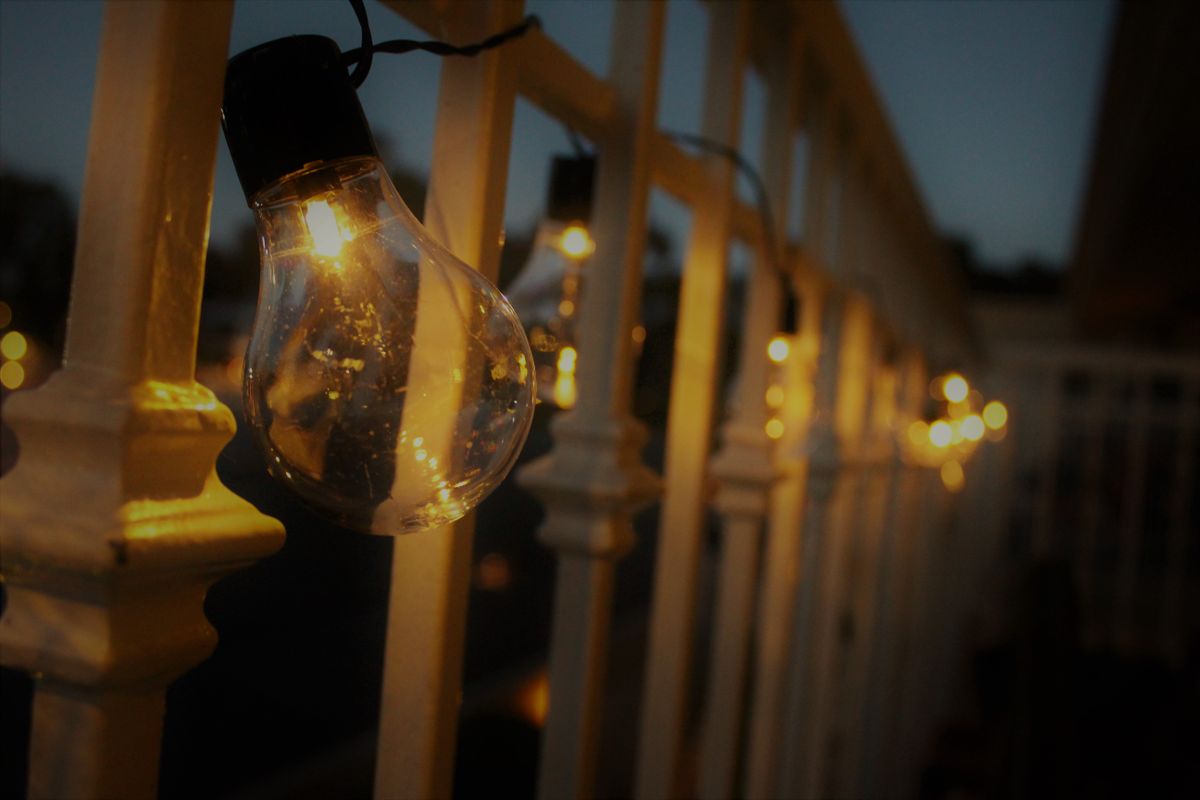
Photo by Humphrey Jones-Behan on Pexels
Solar charging consistency depends on the battery surface area and photovoltaic cell efficiency, which dictates how long the glow lasts after sunset. Retailer data from Michaels regarding upgraded swaying lights indicates that a heavy bulb base and high-flexibility iron wire are often paired with larger capacity batteries to sustain output. When the internal sensor detects a drop in ambient light, it triggers stored energy into the warm white diodes.
Maintaining this glow requires placing panels in unobstructed sunlight, as noted in designing dynamic landscapes with Solar Firefly Lights. If the panel is shaded, the voltage drop can lead to flickering or premature dimming. The dusk sensor deserves its own expectations, because it explains most first-month puzzlement. The photocell fires when ambient light falls below its threshold, which means competing light sources effectively lie to it: a stake within the throw of a porch light, a streetlamp, or even a bright motion flood may wait far into the evening or never switch on at all, and the fix is relocation rather than replacement. Season moves the schedule too — the same stake that lit at 8:45 in June lights at 5:30 in November, shifting with actual dusk rather than the clock. And the glow itself follows a curve across the night: brightest in the first hours while the battery sits at full voltage, then easing gradually toward the small hours. That taper is the design working normally — the LEDs dim gracefully rather than cutting out — and it happens to mirror how real firefly activity fades as the evening cools, which is part of why the effect reads as natural instead of electrical.
Quick answers
Q: What is the average runtime for these lights after a full charge? A: Most Solar Firefly Lights, such as those from TONULAX, provide between 8 and 12 hours of illumination after a standard 6-hour charge in direct sunlight.
Q: Can these lights withstand heavy rain or snow? A: Yes, quality models are built with an IP65 waterproof rating. The flexible iron wire and heavy bulb base mentioned in Michaels product listings are designed to endure wind and precipitation.
Q: Do the bulbs need to be replaced over time? A: LEDs are typically rated for 20,000 to 50,000 hours and rarely require replacement. The most common maintenance is replacing the Ni-MH battery every 1-2 years.
Learn more about Solar Firefly Lights at https://solarfireflylights.com.
Catching the effect on camera
These lights photograph beautifully or terribly depending on twenty minutes of timing. The terrible version is full darkness: a phone camera meets tiny bright points against black, exposes for the points, and returns an image of anonymous dots in a void. The beautiful version is civil twilight — the twenty-odd minutes after sunset when the sky still holds deep blue and the garden retains its shapes — where the warm diodes glow against a scene the sensor can actually render. On a modern phone, night mode plus a steady grip (a fence rail or a propped elbow works when there is no tripod) captures both the glow and the garden that gives it context.
For the swaying itself, video beats stills outright, and a short clip on a breezy twilight evening is the closest a camera gets to the in-person effect. One practical note for the socially inclined: shoot in the first hour of operation, when the batteries hold the diodes at their brightest — the same scene attempted at midnight is a dimmer, grainier cousin of itself.
Sources
Photo by Doğan Furkan Yeşilırmak on Pexels