
How Do Outdoor Solar Lights Store Energy? Solar Charging FAQ
You step into your garden on a quiet summer evening, watching delicate lights sway like glowing fireflies in the gentle breeze. How do these slender stakes capture enough daytime sun to sustain their magical glow past midnight?
Outdoor solar garden lights store energy by using photovoltaic solar cells to convert sunlight into direct current (DC) electricity during daylight hours. This current flows through an internal charge controller into a rechargeable NiMH or Lithium-ion battery, storing chemical energy until an integrated dusk sensor automatically triggers the LED bulbs at sunset.
Selecting the Right Solar Storage Setup for Your Garden
Selecting solar garden lights with high-efficiency photovoltaic panels and matched rechargeable battery capacity ensures consistent nighttime illumination across all outdoor seasons.
Best choice for
- Monocrystalline panels with high-capacity Lithium-ion (LiFePO4) storage — Captures higher photon energy during short or filtered sunlight windows, storing more power per hour of daylight.
- Polycrystalline panels with NiMH rechargeable batteries — Cost-effective and reliable for landscape accents receiving 6 to 8 hours of direct, unobstructed sunlight daily.
- Replacing original rechargeable batteries with standard single-use alkaline AA batteries, which rupture under solar charge.
- Placing solar stake panels directly beneath bright outdoor floodlights or streetlamps that disable dusk sensors.
- Low-Voltage Hardwired Landscape Lights — Best suited for deeply shaded courtyards under dense tree canopy that receive zero direct sunlight.
Expert Tip: Maximize Energy Harvest with Seasonal Panel Tilt and Microfiber Care
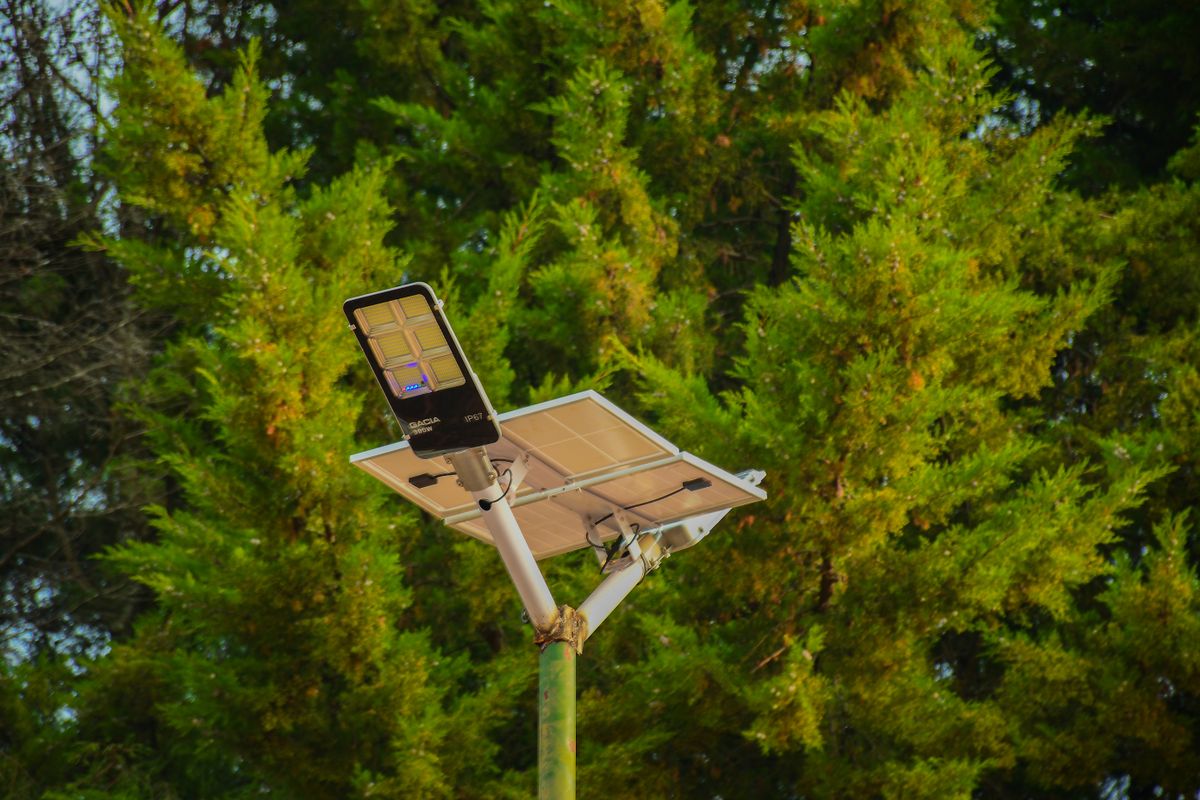
Photo by finix photographer on Pexels
To keep your solar firefly lights glowing late into the night, wipe the top protective solar panel cover with a soft, damp microfiber cloth every two to four weeks. Dust, pollen, and dried rainwater spots act as microscopic shields, reducing solar photon absorption by up to 30%. Furthermore, during late autumn and winter when the sun sits lower on the horizon, tilt or reposition your solar stakes to face south, capturing sunlight at the steepest direct angle possible.
Troubleshooting Solar Energy Storage & Short Evening Runtimes
| Symptom / Scenario | Likely Cause | Diagnostic Check | Corrective Action |
| --- | --- | --- | --- |
| Lights turn off after 1-2 hours of twilight | Insufficient daytime charge or aged battery | Check panel for dirt layer or overhead tree shade during mid-day peak sun | Wipe panel clean; relocate stake to unshaded spot receiving 6-8 hours of sunlight, or replace NiMH battery. |
| Lights flicker or fail to turn on at dusk | Ambient light interference or loose battery connection | Observe if nearby porch lights or streetlamps shine directly on the solar panel | Reposition panel away from artificial lights or adjust stake angle so photoresistor detects natural darkness. |
| Lights glow very dimly even after sunny day | Oxidized battery contacts or sulfated battery cell | Inspect internal battery compartment for white corrosion or moisture buildup | Clean terminal springs with dry cotton swab; install fresh pre-charged rechargeable solar battery. |
| Zero glow after prolonged rain or cloudiness | Depleted battery reserve during low-photon weather | Test panel in direct sunlight after two consecutive overcast days | Perform a 48-hour 'deep charge' by turning the switch OFF for two sunny days, allowing battery to reach 100% capacity. |
If your garden lights turn off after only an hour or two, or fail to illuminate at dusk, use this diagnostic guide to identify the root cause and restore full nighttime illumination.
Anatomy of Energy Flow: From Daytime Sun to Midnight Firefly Glow
Understanding the physical components inside your solar garden stake demystifies how sunlight transforms into enchanted evening light.
Solar Charge & Runtime Estimator
Estimate how many hours of nighttime firefly sway your lights will produce based on daylight hours, battery size, and weather conditions.
Bring Magical Ambient Glow to Your Night Garden
Transform your outdoor space into an enchanted evening sanctuary with solar-powered firefly lights engineered for peak photovoltaic efficiency and long-lasting chemical energy storage.
Key Takeaways: How Solar Energy Storage Works
- Photovoltaic panels absorb sunlight photons and generate direct current (DC) electricity.
- Energy flows through a micro-controller circuit into internal rechargeable NiMH or Li-ion batteries.
- A built-in photoresistor (dusk sensor) measures ambient daylight and opens the LED power circuit at sunset.
- Cloudy days still charge batteries via diffuse daylight, yielding 20% to 50% of peak energy capacity.
- Never install single-use alkaline batteries; only use dedicated rechargeable cells designed for solar charging cycles.
Solar Energy Storage Optimization Checklist
Photo by Myco Libot on Pexels
- Wipe solar panel cover with a soft microfiber cloth every 2-4 weeks to clear dirt, pollen, and water spots.
- Ensure panel positioning gets 6 to 8 hours of unobstructed sunlight away from tall foliage or building overhangs.
- Verify that ambient street lamps or porch lights do not shine on the photoresistor, preventing dusk activation.
- Inspect battery compartment for corrosion annually and replace worn NiMH or Li-ion cells every 1-2 years.
- Turn off power switch for 48 hours to allow 'deep charging' during low-sun seasonal transitions or after long rainy spells.
Common Solar Energy Storage Mistakes to Avoid
Avoid these frequent mistakes that hinder solar charging performance and prematurely damage internal components:
Frequently Asked Questions About Solar Charging & Energy Storage
Clear answers to common questions about how outdoor solar garden lights collect, store, and release energy.
Related Solar Lighting Guides & Resources
Explore these educational topics to deepen your knowledge of eco-friendly outdoor lighting, dusk sensors, and yard placement strategies:
Next Steps for Optimizing Your Outdoor Solar Storage
Your decision: Decide whether your chosen light location receives 6 to 8 hours of unobstructed solar daylight exposure to maximize battery energy storage.
Do this next: Inspect your solar garden light panels for dust or shade, angle panels toward direct southern daylight, and verify that rechargeable batteries are clean and operational.
Related resource: Solar Panel Charging Efficiency: What to Look for in Ambient Garden Lights
Bring warm, magical sway to your night garden with long-lasting Solar Firefly Lights (Available in 4-Pack or 8-Pack).
Take simple steps today to ensure your outdoor space glows with warm, effortless charm every evening.
Cover photo by quang vinh on Pexels.