Choosing Solar Firefly Lights for Yard Environments
 Priya RamanSenior Analyst
October 11, 2026 — The shift toward dynamic landscape lighting has positioned Solar Firefly Lights as a primary choice for homeowners seeking to blend motion with ambient illumination.
Recent evaluations of modern landscape aesthetics highlight a growing preference for "living" light fixtures that interact with environmental factors like wind and shadow. According to a review by Sunco Lighting, high-quality firefly units now utilize IP44 to IP65 weatherproof ratings to ensure durability against varied climate conditions. This technical evolution allows for a more permanent integration of decorative elements into the yard without the maintenance overhead of traditional wired systems.
The Three-Axis Yard Framework

Photo by Michele Raffoni on Pexels
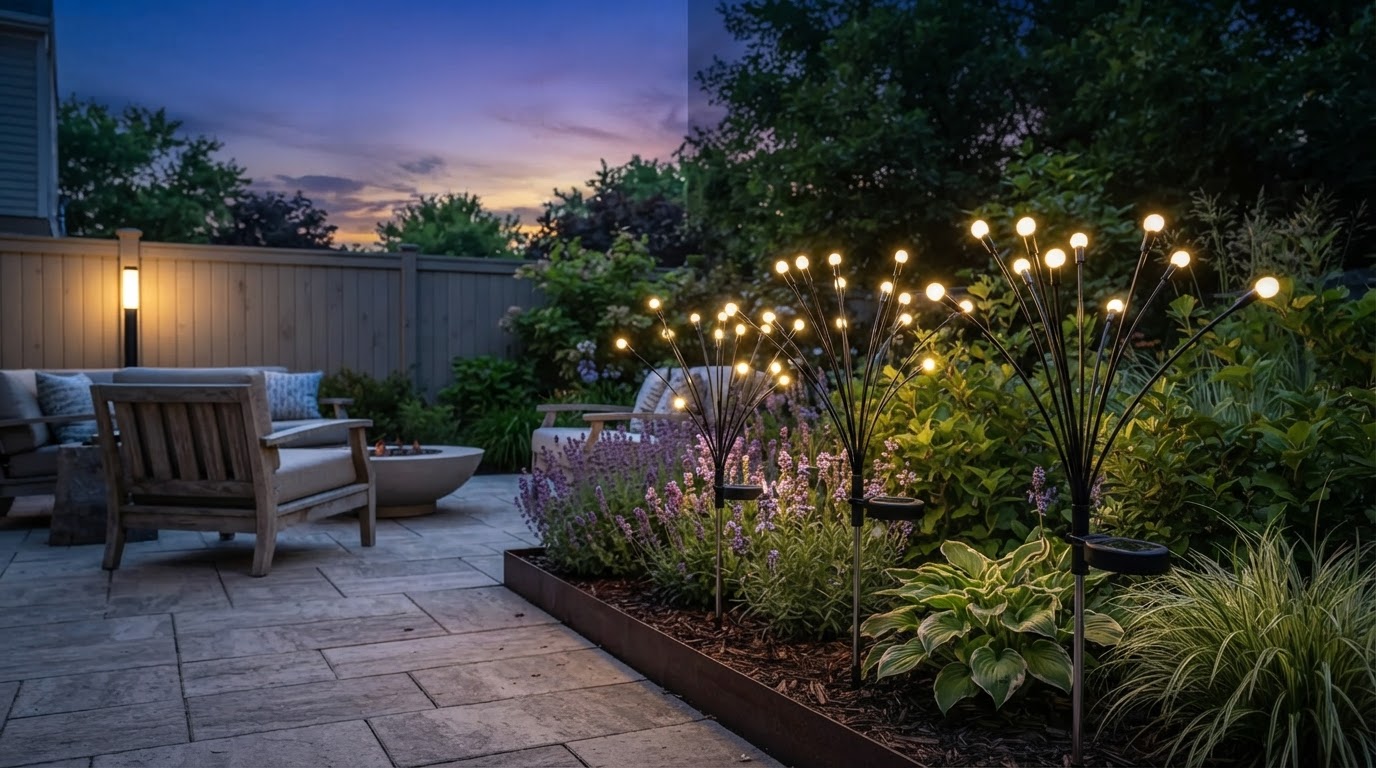
When evaluating Solar Firefly Lights for a yard, two axes matter here: structural resilience and kinetic range. Think of it as a matrix of durability versus motion density. The structural axis is defined by the ingress protection (IP) rating and the material of the support stakes. Research from Nature's Way Bird Products indicates that modern units are designed to withstand rain, wind, and snow by utilizing metal sticks that provide necessary tension for the swaying effect. The kinetic axis measures the "starburst" flexibility, which determines how much the LED heads move in a light breeze. A standard high-performance unit typically features 6 to 10 LED bulbs on flexible stems, powered by a monocrystalline solar panel. These panels are paired with dusk-to-dawn photocell sensors to automate the transition from charging to illumination. For those focusing on specific zones, outdoor led firefly ornaments provide a similar aesthetic for static features, while firefly lights for plants allow for closer integration with softscapes. The decision rule: for open yard areas with high wind exposure, prioritize IP65 rated units with stainless steel ground stakes to prevent leaning. Conversely, for sheltered areas like solar garden decorations for walkway or near solar fairy lights for trees, a higher count of 10-LED starburst heads provides the most effective visual density.
Expert tip: To maximize the swaying motion that gives these lights their name, install them in clusters of three or more at varying heights, ensuring the solar panel has an unobstructed 120-degree view of the sky for optimal battery saturation.
Once you see it this way, selecting the right hardware becomes a matter of matching the light's flexibility to the yard's wind profile.