
Solar Pathway vs. Flower Bed Light Layout: 4-Pack vs. 8-Pack Guide
Should you select a 4-pack or an 8-pack of Solar Firefly Lights for your outdoor space? For narrow, linear pathways up to 15 feet, a 4-pack (32 LEDs) spaced 3 to 4 feet apart provides crisp, elegant border lighting. For deep flower beds or clustered garden islands, an 8-pack (64 LEDs) arranged in staggered triangles is essential to create multi-layered visual depth without tall foliage casting shadows over the solar charging panels.
Pathway vs. Flower Bed Pack Size & Layout Specs
| Landscape Scenario | Recommended Pack Size | Total LED Bulbs | Optimal Stake Spacing | Visual & Spatial Effect |
| --- | --- | --- | --- | --- |
| 10–15 ft Linear Walkway | 4-Pack | 32 Warm LEDs | 3.0 to 4.0 feet single-line | Clean, elegant path outlining with gentle sway along grass border |
| 16–30 ft Driveway or Main Path | 8-Pack | 64 Warm LEDs | 3.5 to 4.0 feet staggered line | Continuous, rhythmic guidance glow preventing visual dark spots |
| Compact Bed (Under 12 sq ft) | 4-Pack | 32 Warm LEDs | 2.0 to 2.5 feet front border | Charming accent lighting nestled among low groundcovers |
| Deep Garden Border (13–25 sq ft) | 8-Pack | 64 Warm LEDs | 2.0 to 3.0 feet triangular cluster | Lush, 3D firefly canopy with front-to-back depth and shade avoidance |
Compare spatial requirements, LED density, and spacing strategies across common landscape scenarios to select your ideal configuration.
Evaluating 4-Pack Linear vs. 8-Pack Cluster Layouts

Photo by Alexas Fotos on Pexels
Pros
- 4-Pack delivers perfectly balanced single-file border lighting for walkways under 15 feet without visually cluttering small spaces.
- 8-Pack provides rich multi-dimensional depth when clustered in deep perennial borders and wide garden beds.
- 4-Pack maintains clean separation along narrow paths, preventing stems from tangling during breezy summer nights.
- 8-Pack distributes multiple solar panels across varied angles, compensating for patchy tree shade in larger flower beds.
- A 4-pack used in a deep flower bed over 12 sq ft leaves noticeable dark voids and gets swallowed by tall foliage.
- An 8-pack installed along a short 8-foot walkway creates overly dense glare and crowded stem clearance.
Failure Modes: What Goes Wrong in Pathway and Garden Layouts
Avoid these critical installation errors that lead to broken lights, uncharged solar batteries, or rigid, artificial nighttime displays.
Interactive Layout Decision Flow
- Is your lighting zone a narrow linear pathway or a wide flower bed border? → Yes: Pathway: Is the total walkway length 15 feet or shorter?. No: Flower Bed: Is the total planting area larger than 12 square feet?
- Pathway <= 15 ft: Choose 4-Pack (32 LEDs). Pathway > 15 ft: Choose 8-Pack (64 LEDs). → Yes: Select 4-Pack (32 LEDs) — space stakes 3–4 ft apart along path border.. No: Select 8-Pack (64 LEDs) — space stakes 3.5–4 ft apart along both sides or staggered.
- Flower Bed > 12 sq ft: Choose 8-Pack (64 LEDs). Flower Bed <= 12 sq ft: Choose 4-Pack (32 LEDs). → Yes: Select 8-Pack (64 LEDs) — place in staggered triangular clusters for 3D depth.. No: Select 4-Pack (32 LEDs) — place along front border in front of tall foliage.
The Ideal Pack Size Recommendation for Your Space
If you are illuminating a straight or gently curved walkway up to 15 feet, choose the 4-Pack (32 Warm LEDs) for crisp, single-file symmetry. If you are decorating a multi-layered flower bed, a garden island, or a walkway longer than 15 feet, select the 8-Pack (64 Warm LEDs). The 8-pack provides the structural density required to layer lights in staggered triangles, ensuring every glowing warm bulb sways freely without getting hidden behind dense summer leaves.
Transform your twilight garden tonight—select your ideal pack size below.
Essential Layout & Density Rules at a Glance
Keep these vital dimensions and spacing rules in mind as you plan your outdoor layout:
Layout Selection Guide: Best Configurations & Edge Cases
Choosing between a 4-pack and an 8-pack depends on whether your lighting layout is single-file linear (pathways) or multi-layered spatial (flower beds).
Best choice for
- 4-Pack (32 LEDs) — Provides balanced single-file spacing at 3–4 feet apart without visual crowding.
- 8-Pack (64 LEDs) — Allows staggered triangular clustering that creates multi-dimensional depth among plants.
- Avoid using a single 4-pack in deep flower beds over 15 feet long, as the light bulbs will appear sparse and swallowed by tall foliage.
- Avoid placing 8 stakes along a short 8-foot path, which creates stem sway entanglement and overly dense glare.
- Combination Layout (12 Stakes total / One 4-Pack + One 8-Pack) — Best for homeowners outlining an entry path (4-pack) that terminates into a large floral border (8-pack).
Recommended Solar Firefly Light Configurations
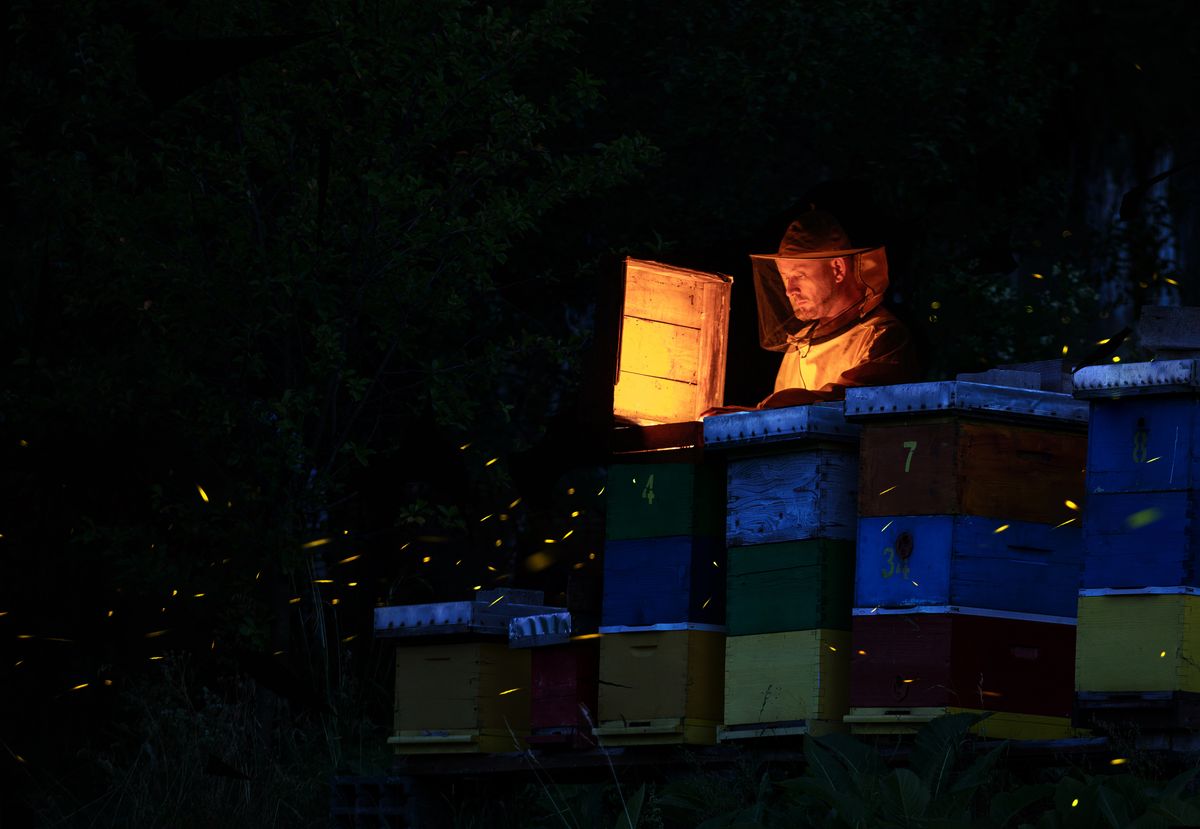
Photo by Amel Uzunovic on Pexels
Choose the pack size designed for your outdoor layout requirements. Both options feature auto dusk-to-dawn sensors, weather-resistant construction, and warm glowing LEDs on flexible swaying stems.
Real-World Landscape Layout Scenarios
12-Foot Flagstone Walkway Leading to Front Porch — Deploy a 4-Pack (32 LEDs). Place 2 stakes along the left side and 2 stakes along the right side in a staggered offset, spaced 3.5 feet apart and set back 8 inches from the stone edge.
6x4 Foot Perennial Flower Bed with Hostas and Daylilies — Deploy an 8-Pack (64 LEDs). Arrange stakes in two staggered rows (4 in front, 4 in middle). Angle all solar panels toward the south, elevated slightly above low groundcover leaves.
25-Foot Curved Backyard Pathway Terminating at a Patio — Deploy an 8-Pack (64 LEDs). Space stakes 3.5 feet apart along the outer curve of the path, guiding eyes toward the patio zone with an uninterrupted warm amber glow.
Here is how homeowners successfully deploy 4-packs and 8-packs in typical residential yard configurations:
Understanding Stem Sway Radius and Wind Dynamics
The magical charm of Solar Firefly Lights lies in their flexible, spring-loaded stems that react to gentle night breezes. However, achieving that mesmerizing, organic sway requires physical clearance. Each stake features multiple warm LED bulbs resting on independent stems that flex up to 5 inches in any direction.
When stakes are placed too close together—less than 18 inches apart—the stems can tangle during gusty winds, creating rigid clumps rather than individual glowing points. On open pathways, position each stake 3 to 4 feet apart. This spacing leaves ample airspace for stems to float smoothly without colliding with neighboring lights or adjacent physical structures.
The Geometry of Flower Bed Layering: Escaping Shadow Zones
Designing a light display inside a flower bed presents a double challenge: creating visual depth while ensuring solar panels receive 6 to 8 hours of direct daytime sunlight. Dense foliage creates dynamic shade patterns that shift throughout the day. If a solar panel sits directly beneath broad leaves like Hostas, Ferns, or Hydrangeas, the internal battery will fail to charge, leaving your bed dark at dusk.
To solve this, employ a Triangular Staggered Layout using an 8-pack:
This two-tier arrangement builds a multi-dimensional canopy of glowing fireflies that seems to hover naturally within the greenery, illuminating plant textures from within.
Safe Setback Rules Along Lawn Borders
One of the most frequent causes of solar light failure along pathways is accidental mechanical damage. When staking lights along lawn borders, always enforce a 6 to 12-inch setback from the grass turf line. This buffer zone protects the ABS plastic stake housing and solar panel brackets from fast-moving lawn mower wheels, side-discharge chutes, and high-speed string trimmer lines. Furthermore, setting stakes slightly back into mulch or gravel borders frames the walkway with a softer, ambient light pool rather than harsh direct glare.
Frequently Asked Questions
Get answers to common placement, spacing, and installation questions for solar firefly garden lights.
Next Steps: Bringing Your Nighttime Garden to Life
Your decision: Determine whether your installation site is a linear path (choose 4-Pack) or a multi-layered garden bed (choose 8-Pack).
Do this next: Measure your pathway length or garden bed square footage, check daytime sun exposure, and order your chosen pack size.
Solar Firefly Lights (8-Pack / 64 LEDs) for deep flower bed layering or long walkways.
Ready to transform your garden into a cozy twilight sanctuary? Follow these simple steps to finalize your lighting layout:
Related Layout & Staking Guides
Offer internal links to sunlight mapping, soil prep, and cluster troubleshooting.
Cover photo by Alexas Fotos on Pexels.